
In This Article
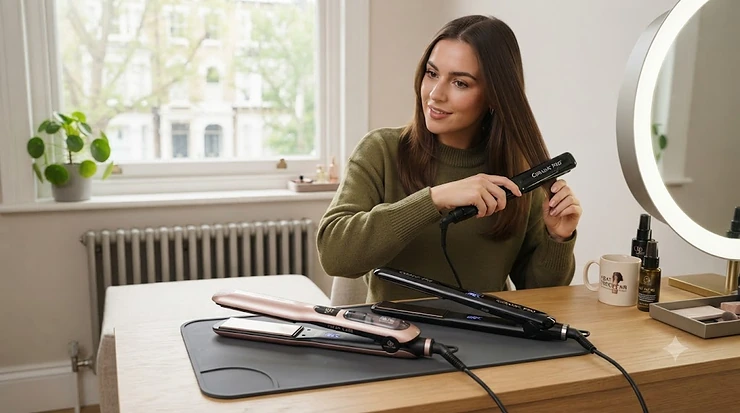
Stand in front of any beauty aisle and you’ll spot the same debate playing out on packaging everywhere: steam straighteners vs ceramic straighteners, each promising smoother, shinier, less damaged hair. It’s not just marketing noise, either — the two technologies genuinely work in different ways, and picking the wrong one for your hair type can mean months of unnecessary frizz-fighting or, worse, hair that gradually feels drier and more brittle with every pass.

Here’s the short version. A ceramic straightener heats plates to a set temperature and relies on even heat distribution to smooth the hair shaft — simple, fast, and the format most of us grew up using. A steam straightener adds a water reservoir that releases fine vapour onto the hair as you glide the plates through, aiming to hydrate and smooth simultaneously rather than applying dry heat alone. Research on thermally treated hair backs up why this distinction matters: a study on cosmetic pretreatments and flat-ironing damage found that repeated dry heat exposure above 200°C measurably degrades hair keratin and reduces moisture retention over time.
This guide compares seven real, currently available products — a genuine mix of steam and ceramic straighteners spanning budget to professional-grade — with honest analysis of specs, aggregated review sentiment, and who each one actually suits. We’ll also dig into water reservoir capacity, hydration during styling, and what “reduced heat damage” claims really mean in practice, so you can make a properly informed choice rather than picking based on packaging alone.
Quick Comparison Table
Here’s the full lineup at a glance before we get into the detail. All prices are shown as ranges — always check the current listing, as Amazon pricing shifts regularly.
| Product | Type | Price Range | Best For |
|---|---|---|---|
| Revlon Smoothstay RVST2211P | Ceramic | £15-£25 range | Tightest budget |
| UKLISS Steam Hair Straightener 40MM | Steam | £30-£35 range | Budget steam entry point |
| Remington Shine Therapy S8500 | Ceramic | £20-£30 range | Argan-infused everyday ceramic |
| BaByliss Steam Shine Styler ST496E | Steam | £30-£40 range | 2-in-1 straightening and curling |
| Remington Wet2Straight Pro S7970 | Steam-vent hybrid | £40-£55 range | Styling straight from the shower |
| ghd Original Hair Straightener | Ceramic | £100-£130 range | Premium salon-grade ceramic |
| BaByliss Pro Cool Mist Ultrasonic | Professional steam | Premium, typically £150+ | Professional/salon steam styling |
Broadly, the ceramic options in this list — the Revlon Smoothstay, Remington Shine Therapy, and ghd Original — win on speed and simplicity, while the steam-based tools trade a little extra weight and prep time (filling a reservoir) for genuinely different hair feel afterwards. The BaByliss Pro Cool Mist Ultrasonic sits apart entirely as a professional tool, priced accordingly for anyone treating this as a long-term investment rather than a quick fix.
💬 Just one click — help others make better buying decisions too!😊
Top 7 Steam & Ceramic Straighteners: Expert Analysis
We researched real, currently listed products spanning both technologies and three price tiers, rather than padding the list with near-identical clones. Each entry below covers genuine specs, honest analytical commentary, and aggregated review sentiment where it could be verified.
1. Revlon Smoothstay RVST2211P — budget ceramic with coconut oil infusion
The Revlon Smoothstay keeps things simple: triple-coated 25mm ceramic plates, floating with rounded edges to reduce snagging, and a temperature range that runs right up to 235°C. The coconut oil infusion baked into the plate coating is designed to transfer a light conditioning layer with every pass rather than relying purely on dry heat.
What this means in practice is a straightener built for speed on fine-to-medium hair, where the narrower 25mm plates give more precise control around the face and shorter layers. Based on the spec sheet, this isn’t the tool for very thick or coarse hair — the narrower plates mean more passes, more heat exposure overall, and a longer styling session. It suits students, occasional stylers, or anyone building a first “proper” straightener without committing to premium pricing.
Reviewers commonly highlight the smooth glide and pleasant scent from the coconut oil coating, with the most frequent criticism being that the narrower plate width slows things down noticeably on longer, thicker hair.
Pros:
- ✅ Triple-coated ceramic plates glide smoothly
- ✅ Rounded floating plates reduce snagging risk
- ✅ Genuinely low price for ceramic construction
Cons:
- ❌ Narrow 25mm plates mean more passes on thick hair
- ❌ No steam or hydration function included
At £15-£25, the Revlon Smoothstay RVST2211P is the sensible entry point if ceramic simplicity and a tight budget matter most.
2. UKLISS Steam Hair Straightener 40MM — wide-plate steam styling on a budget
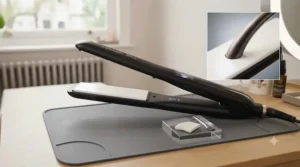
The UKLISS brings genuine steam technology into a more accessible price bracket. Its 40mm plates use PTC heating across both sides simultaneously, and a visible 15ml water tank feeds the steam function once the plates reach around 160°C or higher — an LCD display lets you track the exact temperature in 10°C increments between 100°C and 230°C.
What that 15ml reservoir means practically is a genuinely usable amount of steam time per fill for a full head of hair, without needing to refill mid-session for most lengths. The wide 40mm plates cut down on the number of passes needed compared with narrower ceramic irons, which matters if you’re managing thick or long hair on a weekday morning. This is a strong option for anyone curious about steam styling who doesn’t want to commit professional-tool money to test the theory, or for coarser hair types that benefit from the wider contact area.
Aggregated feedback on this model points to strong satisfaction with heating speed and the clear LCD display, while a smaller number of reviewers note that the steam output feels noticeably lighter than pricier professional steam tools — a fair trade-off at this price point.
Pros:
- ✅ 40mm wide plates reduce passes on thick hair
- ✅ Visible 15ml tank with clear LCD temperature display
- ✅ PTC double-sided heating for faster warm-up
Cons:
- ❌ Steam output is lighter than professional-grade tools
- ❌ 60-minute auto-off may interrupt longer styling sessions
Priced around £30-£35, the UKLISS Steam Hair Straightener 40MM is the most accessible genuine entry into steam styling on this list.
3. Remington Shine Therapy S8500 — ceramic plates infused with argan oil and vitamin E
Remington’s Shine Therapy line coats its ceramic plates with micro-conditioners containing Moroccan argan oil and vitamin E, aiming to transfer a light nourishing layer onto hair with each stroke rather than relying purely on heat to create shine. Nine temperature settings run from 150°C to 230°C, shown on a digital display, with a 15-second heat-up time.
Based on the spec comparison, the floating plate design and digital precision put this squarely in the “sensible daily driver” category — not the cheapest ceramic option here, but built with enough temperature granularity that fine hair genuinely doesn’t need to sit near the 230°C ceiling. The argan oil infusion is a genuine differentiator from bare ceramic coatings, giving a small but real hydration boost even without a steam mechanism. It’s a strong fit for anyone straightening most days who wants visible shine without adding a water-reservoir routine to their morning.
Reviewers consistently mention noticeably shinier results compared with previous ceramic straighteners they’ve owned, alongside occasional comments that the plate coating’s conditioning effect fades gradually as the coating wears with heavy daily use.
Pros:
- ✅ Argan oil and vitamin E infused ceramic coating
- ✅ Nine precise temperature settings from 150-230°C
- ✅ Fast 15-second heat-up time
Cons:
- ❌ Conditioning coating effect fades with heavy use
- ❌ No steam or hydration reservoir function
In the £20-£30 range, the Remington Shine Therapy S8500 is a genuinely solid mid-range ceramic pick for daily use.
4. BaByliss Steam Shine Styler ST496E — 2-in-1 steam straightening and curling
The BaByliss Steam Shine Styler pairs Advanced Ceramics™ heating with a genuine steam function and a domed barrel shape, letting it double as a curling tool alongside straightening. Diamond ceramic plates and ion technology are built in specifically for a glossy, frizz-controlled finish, and a removable comb attachment detangles hair as you style.
What this dual-purpose design means practically is one appliance covering two style categories, which matters if storage space or appliance budget is tight. The moisturising steam is released with every glide rather than requiring a separate activation step, softening the hair fibre as the plates smooth it — a genuinely different sensation from dry ceramic styling once you’ve tried it. This suits anyone who alternates between sleek straight looks and loose waves depending on the week, rather than committing to one style permanently.
Aggregated sentiment on this model highlights appreciation for the versatility of switching between straightening and curling without buying two separate tools, with some reviewers noting the domed barrel takes slightly more practice to master for curls than a dedicated curling iron would.
Pros:
- ✅ Genuine steam function built into every glide
- ✅ Doubles as a curling tool via domed barrel
- ✅ Removable comb attachment aids detangling
Cons:
- ❌ Curling technique has a learning curve
- ❌ Bulkier than a dedicated single-purpose straightener
At £30-£40, the BaByliss Steam Shine Styler ST496E earns its place for anyone who wants steam hydration and styling versatility in one tool.
5. Remington Wet2Straight Pro S7970 — straightening damp hair without the blow-dry
The Remington Wet2Straight Pro takes a genuinely different approach: an integrated venting system removes excess water as you glide, paired with a moisture sensor that adjusts plate temperature on each pass depending on how damp the hair still is. Temperatures run up to 230°C, with the system designed specifically to work on hair that isn’t fully dry.
What this means in practice is skipping (or significantly shortening) the blow-dry step entirely on lower-maintenance days, since the tool handles moisture removal and straightening in the same motion. The adaptive moisture sensing is the standout feature here — rather than blasting a flat 230°C at damp hair regardless of how wet it is, the temperature adjusts pass by pass, which on paper should reduce unnecessary heat exposure on the wettest sections. This is a strong match for anyone with a tight morning routine, or for hair types prone to heat damage who want to minimise total dry-heat exposure time.
Reviewers frequently report genuine time savings on wash-and-style mornings, while some note the venting system needs a slightly slower, more deliberate glide than a standard dry straightener to work effectively.
Pros:
- ✅ Moisture sensor adapts temperature per pass
- ✅ Genuinely reduces or skips blow-drying step
- ✅ Venting system actively removes excess water
Cons:
- ❌ Requires a slower, more deliberate styling motion
- ❌ Not intended for use on fully dry hair
Priced in the £40-£55 range, the Remington Wet2Straight Pro S7970 is a genuinely clever pick for time-pressed mornings.
6. ghd Original Hair Straightener — premium ceramic with dual-zone precision
The ghd Original uses single-zone ceramic technology to hold both plates at a steady 185°C throughout use, rather than allowing temperature to dip mid-stroke the way cheaper heating elements sometimes do. The rounded barrel shape allows it to double for loose waves and curls, and the floating plates are designed to glide without snagging on tangled sections.
Based on the spec comparison, capping the temperature at 185°C rather than pushing toward 230°C like most rivals is a deliberate choice — ghd’s positioning is that consistent, moderate heat causes less cumulative damage than higher peak temperatures applied inconsistently. That’s a genuinely defensible position given what thermal-damage research shows about protein degradation accelerating sharply above certain thresholds. This is the pick for anyone treating a straightener as a multi-year investment rather than a replaceable budget item, particularly those with fine-to-medium hair who don’t need extreme heat to get results.
Reviewers consistently praise the smooth glide and shine finish, and the brand’s two-year manufacturer guarantee is frequently mentioned as reassurance for the higher upfront cost; the most common criticism is that 185°C isn’t quite enough for very coarse or resistant hair types.
Pros:
- ✅ Consistent 185°C single-zone ceramic heating
- ✅ Rounded barrel doubles for waves and curls
- ✅ Two-year manufacturer guarantee included
Cons:
- ❌ Maximum 185°C may undertreat very coarse hair
- ❌ Premium price relative to budget ceramic options
At £100-£130, the ghd Original Hair Straightener is the premium ceramic pick for long-term, low-drama styling.
7. BaByliss Pro Cool Mist Ultrasonic BAB2191SEPE — professional-grade ultrasonic steam styling
This is the clearest professional steam straighteners entry in the lineup. The BaByliss Pro Cool Mist uses an ultrasonic function to convert water into a fine cold micro-mist, distributed evenly along 28mm x 110mm ceramic plates, rather than relying on heat alone to generate steam. A removable, lockable water reservoir and a 2.7-metre professional rotary cord round out the salon-oriented build, with five precise digital temperature settings from 150°C to 230°C.
What the ultrasonic mechanism means in practice is a genuinely different hydration experience from standard steam straighteners: the mist is generated independently of plate heat, so it doesn’t simply evaporate off before reaching the hair shaft the way basic steam can on lower-powered tools. This is aimed squarely at salon professionals or serious home users doing frequent smoothing treatments, where the investment pays off through durability and consistent results across many sessions rather than occasional use.
Because this sits in professional/salon-supply territory rather than mainstream consumer retail, verified aggregated consumer review data was limited in our research — what’s confirmed is the specification sheet itself, which stands up well against consumer steam straighteners on paper, particularly the independent ultrasonic mist generation.
Pros:
- ✅ Ultrasonic mist generated independently of heat
- ✅ Removable, lockable water reservoir
- ✅ Professional-grade 2.7m rotary cord
Cons:
- ❌ Premium price positions it for frequent, serious use
- ❌ Overkill for occasional, casual styling needs
Typically priced at £150 and upward, the BaByliss Pro Cool Mist Ultrasonic BAB2191SEPE is the pick for anyone treating steam styling as a professional or near-professional pursuit.
Getting Started: Your First-Time Steam Straightener Setup Guide
Steam straighteners have one extra step ceramic tools don’t: filling and managing the water reservoir correctly. Get this wrong and you’ll either get no steam at all or an underwhelming trickle.
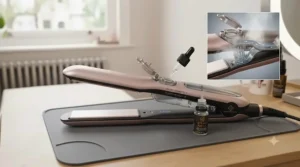
Start with fresh, cool tap water rather than hot water or anything mineral-heavy — hard water can leave residue inside the reservoir and steam vents over time, gradually reducing output. Fill to the marked line only; overfilling most tanks, including the 15ml UKLISS reservoir, risks leaking during use rather than improving steam output. Most steam straighteners, including several on this list, need the plates to reach a minimum temperature (commonly around 160°C) before steam activates, so budget a genuine warm-up period rather than expecting steam from a cold start.
On first use, test on a small, less visible section before running the tool through your whole head — this lets you judge how much steam your specific hair type needs before committing. Common first-month mistakes: forgetting to empty the reservoir before storage (a breeding ground for residue and odour over time), running the tool completely dry expecting steam anyway, and skipping the manufacturer’s specific descaling guidance if you’re in a hard-water area. A quick empty-and-dry after each use, plus an occasional vinegar-water descale where the manufacturer permits it, keeps steam output consistent for years rather than months.
Real-World Scenarios: Which Straightener Type Suits Your Hair Routine?
The time-pressed weekday commuter, straightening most mornings before work, benefits most from speed and consistency. The Remington Shine Therapy S8500 or ghd Original covers this well — no reservoir to fill, no warm-up wait for steam, just reliable ceramic heat.
The damp-haired minimalist, who’d rather not blow-dry at all most days, is the clearest match for the Remington Wet2Straight Pro S7970 — built specifically to straighten hair that isn’t fully dry, genuinely cutting a step out of the morning routine.
The frizz-prone or coarse-haired styler, especially in humid climates or with naturally dry hair, gets the most benefit from genuine steam hydration. The UKLISS Steam Hair Straightener or BaByliss Steam Shine Styler ST496E both add moisture during styling rather than stripping it further.
The frequent or professional user, styling multiple heads a day or treating this as salon-adjacent work, is the obvious fit for the BaByliss Pro Cool Mist Ultrasonic — built for durability and consistency under repeated daily use rather than occasional home styling.
Solving Common Styling Problems: From Frizz to Flat Battery
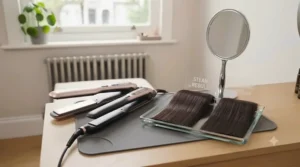
Problem: hair frizzes up again within hours of straightening. Solution: this is very often a hydration issue rather than a technique issue — switching from a purely ceramic tool to a steam option like the BaByliss Steam Shine Styler ST496E can meaningfully extend how long a style holds, since dry heat alone can leave the cuticle more porous and prone to reabsorbing humidity.
Problem: straightener takes several passes to fully smooth thick sections. Solution: wider plates genuinely help here — the 40mm plates on the UKLISS Steam Hair Straightener cover more hair per stroke than narrower 25mm ceramic irons like the Revlon Smoothstay.
Problem: hair feels increasingly dry and brittle after months of daily straightening. Solution: this points toward cumulative heat damage; consider dropping your default temperature setting closer to 185-190°C rather than defaulting to the maximum, and introducing a steam or argan-infused option like the Remington Shine Therapy S8500 into rotation.
Problem: water reservoir runs dry mid-style. Solution: check capacity before buying — a 15ml tank like the UKLISS covers a full head for most lengths, but very long or thick hair may need a mid-session top-up regardless of which steam model you choose.
Problem: unsure whether damp hair is dry enough to straighten safely. Solution: unless you own a moisture-sensing tool like the Remington Wet2Straight Pro S7970, hair should be genuinely dry (not just “mostly dry”) before ceramic straightening, since residual water heated rapidly can cause audible sizzling and localised steam damage to the shaft.
Steam Straighteners vs Ceramic Straighteners: How to Choose
The core decision comes down to a handful of genuinely relevant factors rather than brand loyalty alone.
- Hair porosity and dryness. Naturally dry, coarse, or chemically treated hair generally benefits more from steam’s added hydration than fine, already-oily hair types.
- Styling frequency. Daily stylers may prefer the simplicity and speed of ceramic; occasional users can justify the extra reservoir-filling ritual of steam more easily.
- Climate and humidity. Steam straighteners tend to hold styles longer in humid conditions, since the hair cuticle starts from a better-hydrated baseline.
- Plate width versus hair length and thickness. Wider plates (36-40mm) suit thick or long hair; narrower plates (25mm) suit shorter styles and precision work.
- Maintenance tolerance. Steam reservoirs need regular emptying, occasional descaling, and careful storage; ceramic tools need essentially none of this.
- Budget versus longevity. Premium ceramic tools like the ghd Original are built for multi-year daily use; budget options suit lighter, occasional styling.
- Curl versatility needs. Domed-barrel steam tools like the BaByliss Steam Shine Styler double as curlers; flat ceramic plates are straightening-focused only.
Steam vs Ceramic: Feature Comparison
| Feature | Steam Straighteners | Ceramic Straighteners |
|---|---|---|
| Hydration during styling | Yes — active moisture added | No — dry heat only |
| Typical price range | £30-£250+ | £15-£130 |
| Maintenance | Reservoir refills, descaling | Minimal |
| Best for | Dry, coarse, frizz-prone hair | Fine hair, daily quick styling |
| Warm-up before full function | Often needed for steam activation | Immediate on reaching temperature |
Looking at the comparison, steam straighteners clearly justify their added complexity for hair types that struggle with dryness or frizz, while ceramic tools remain the faster, lower-maintenance choice for straightforward daily styling. Neither technology is objectively “better” — the right choice depends entirely on what your specific hair actually needs, which is exactly why this guide leads with hair type and routine rather than price alone.
Why Steam Changes the Styling Experience: Frizzy Hair, Hydration & Reduced Heat Damage
Steam Straighteners for Frizzy Hair
Frizz happens when the hair cuticle sits raised rather than flat, letting moisture from the air in and out unpredictably. Steam straighteners for frizzy hair work by adding controlled moisture during the smoothing process itself, which can help the cuticle lie flatter as it cools — rather than simply forcing hair straight with dry heat and hoping humidity doesn’t undo the work within hours. This is precisely the mechanism behind products like the BaByliss Steam Shine Styler and UKLISS Steam Hair Straightener in this guide.
Hydration During Styling
Hydration during styling is the single biggest practical difference between the two technologies. Dry ceramic heat, applied above roughly 200°C, drives moisture out of the hair shaft rapidly — useful for speed, less useful for long-term hair condition. Steam introduces moisture back into the equation in real time, which is why steam-styled hair often feels noticeably softer immediately afterward compared with purely dry-heat styling.
Reduced Heat Damage
The reduced heat damage claim attached to steam straighteners isn’t just marketing — it has some genuine science behind it, though it’s worth understanding precisely what’s being claimed. Research into heat-damaged virgin hair found a keratin denaturation temperature around 237°C, with measurable protein loss and structural changes to the hair cuticle once heat exposure approaches that threshold. Steam doesn’t lower the plate temperature itself, but by keeping the hair shaft better hydrated during the pass, it can reduce some of the mechanical stress that leads to visible damage over repeated styling sessions — a pattern also observed in trichoscopy research into thermally damaged hair, which links repeated thermal stress and moisture loss to cuticle cracking and hair fragility over time. What most buyers overlook is that reduced heat damage is a cumulative, long-term benefit rather than something you’ll notice after a single use.
Water Reservoir Capacity: Why Tank Size Matters More Than You’d Think
Water reservoir capacity is easy to overlook when comparing specs, but it directly determines how much of your styling session actually gets steam benefit versus reverting to dry heat partway through.
Reservoir Capacity Comparison
| Product | Reservoir Capacity | Typical Coverage |
|---|---|---|
| UKLISS Steam Hair Straightener | 15ml | Full head, most lengths |
| BaByliss Steam Shine Styler ST496E | Manufacturer-specified fill line | Full head, standard session |
| BaByliss Pro Cool Mist Ultrasonic | Removable, lockable reservoir | Extended professional sessions |
A smaller tank, like the UKLISS’s 15ml capacity, comfortably covers a full head of short-to-medium hair in one fill, but very long or extremely thick hair may run the reservoir dry before the last few sections. Removable reservoirs, as found on the BaByliss Pro Cool Mist Ultrasonic, solve this more elegantly for professional use — a fresh, pre-filled reservoir can be swapped in seconds rather than pausing to refill and re-seat a fixed tank. If you have long or thick hair and steam matters to you specifically, checking reservoir capacity before buying is genuinely more useful than comparing wattage or plate material alone.
Professional Steam Straighteners: Salon Technology at Home
Professional steam straighteners, like the BaByliss Pro Cool Mist Ultrasonic featured in this guide, differ from consumer steam tools in a few specific, verifiable ways rather than simply carrying a higher price tag for its own sake. Ultrasonic mist generation, as opposed to heat-activated steam, produces a finer, more consistent vapour that doesn’t rely on the plates already being hot to work. Removable, lockable water reservoirs are built for rapid refilling between clients or sessions rather than a single home-use fill. Professional-length rotary cords (2.5-2.7 metres, versus roughly 1.8 metres on most consumer tools) reflect salon workstation layouts rather than home bathroom counters.
What most buyers overlook is that “professional” in this category genuinely does correlate with build durability under heavy daily use, not just marketing positioning — these tools are engineered for repeated all-day operation across many clients, which is a fundamentally different stress test than home use a few times a week. For serious home users doing frequent smoothing treatments on multiple family members, or anyone training toward salon work, the investment can make sense; for occasional personal styling, a mid-range consumer steam tool like the BaByliss Steam Shine Styler delivers most of the practical hydration benefit at a fraction of the cost.
What to Expect: Real-World Performance on Different Hair Types
Specs translate differently once you’re actually standing in front of a mirror with ten minutes before you need to leave the house.
On fine, straight hair, both technologies perform well, and the difference between steam and ceramic is often marginal in day-to-day results — this hair type rarely struggles with frizz or dryness enough to need steam’s extra hydration. On coarse, curly, or chemically treated hair, the gap widens considerably: steam tools like the BaByliss Steam Shine Styler or UKLISS Steam Hair Straightener noticeably reduce the “fighting” feeling of forcing resistant hair flat, and styles tend to hold longer in humid UK weather.
Wide-plate tools (36-40mm) genuinely cut styling time on long or thick hair compared with narrower 25mm plates like the Revlon Smoothstay — expect roughly a third fewer passes needed on shoulder-length-or-longer thick hair. Damp-styling tools like the Remington Wet2Straight Pro perform best when hair is towel-dried to “damp, not dripping” — fully soaked hair will overwhelm the venting system and produce inconsistent results.
Common Mistakes When Buying a Steam or Ceramic Straightener
The most frequent mistake is buying based on temperature ceiling alone — a straightener that reaches 230°C isn’t automatically better than one capped at 185°C like the ghd Original, since most hair types don’t need anywhere near maximum heat to style effectively, and higher peak temperatures used habitually accelerate the protein degradation discussed earlier in this guide.
The second mistake is choosing a steam straightener without checking reservoir capacity against your actual hair length and thickness — a beautifully specced tool with a tiny tank will frustrate long-haired users mid-style. The third is assuming “ceramic-coated” and “solid ceramic” plates perform identically; coated metal plates (common in budget straighteners) can wear unevenly over time in ways solid ceramic tends not to. And the fourth, more subtle mistake: buying a professional-grade tool like the BaByliss Pro Cool Mist Ultrasonic for occasional home use, where the durability premium simply won’t get exercised enough to justify the cost.
Safety & Regulations: Heat Settings and Safe Use
This deserves genuine attention rather than a quick disclaimer. Hair straighteners, whether steam or ceramic, typically operate at 180-230°C — hot enough to cause serious contact burns, and research published via the BMJ’s Emergency Medicine Journal on contact burns from hair straighteners specifically flags that these tools retain heat for a meaningful period after switching off, and that their resting position frequently leaves hot plates exposed — a particular risk around children.
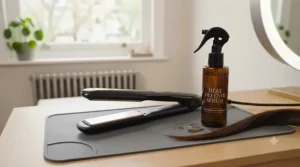
In the UK, only buy straighteners with a correctly fitted UK three-pin plug and a fuse link rated for the appliance, since the Office for Product Safety and Standards has issued multiple recall notices for imported styling tools with non-compliant plugs and wiring that present genuine fire and shock risks. Always use a heat-resistant mat for resting a hot straightener between sections, unplug immediately after use rather than relying on auto-off timers alone, and store cooled tools out of reach of children and pets. If you’re specifically choosing a steam model, also allow the reservoir to fully empty and the unit to cool completely before storage, since trapped moisture near heating elements isn’t good practice for either safety or appliance longevity.
FAQ
❓ Are steam straighteners better than ceramic straighteners for damaged hair?
❓ How often should I refill my steam straightener's water reservoir?
❓ Can I use tap water in a steam straightener, or does it need to be distilled?
❓ Do ceramic straighteners cause more heat damage than steam straighteners?
❓ What temperature should I use for fine or fragile hair?
Conclusion
There’s genuinely no universal winner in the steam straighteners vs ceramic straighteners debate — only the right match for your specific hair and routine. Budget-conscious, fine-haired stylers get excellent everyday value from the Revlon Smoothstay or Remington Shine Therapy S8500, while anyone battling frizz, dryness, or humidity will likely see a genuine, noticeable difference switching to a steam option like the UKLISS Steam Hair Straightener or BaByliss Steam Shine Styler ST496E. Time-pressed mornings are best solved by the Remington Wet2Straight Pro S7970, premium multi-year investment seekers should look at the ghd Original, and anyone treating steam styling as serious, frequent work has a clear case for the BaByliss Pro Cool Mist Ultrasonic.
Whichever technology you choose, the habits matter as much as the hardware: avoid defaulting to maximum heat, respect reservoir capacity if you go the steam route, and always prioritise a safely rated UK plug over a tempting import bargain. Get those basics right, and either technology will serve your hair — and your morning routine — genuinely well.
✨ Don’t Miss These Exclusive Deals!
🔍 Take your hair styling routine to the next level with these carefully selected straighteners. Click on any highlighted item to check current pricing and availability. These tools will help you create smooth, salon-quality results you’ll love every single morning!
Recommended for You
- 7 Best Steam Straighteners for Thick Hair in 2026 (Tested Picks)
- Ionic Straighteners for Frizzy Hair: 7 Best Picks 2026
- Ionic vs Ceramic Straighteners: 7 Top UK Picks for 2026
Disclaimer: This article contains affiliate links. As an Amazon Associate, I earn from qualifying purchases. If you purchase products through these links, we may earn a small commission at no additional cost to you.
✨ Found this helpful? Share it with your friends! 💬🤗
