
In This Article
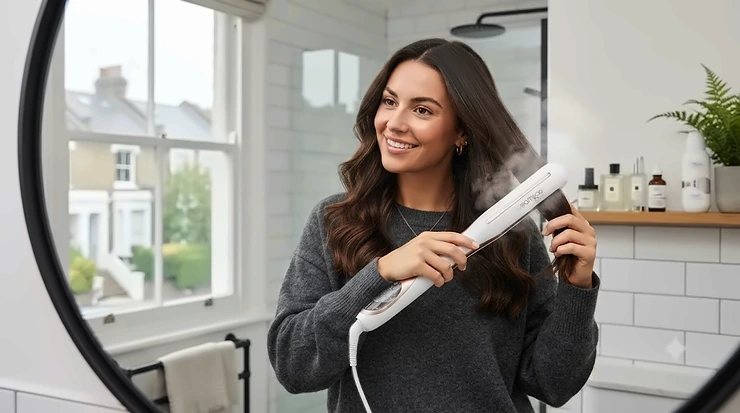
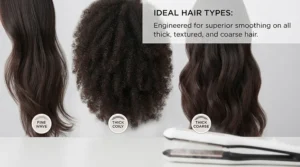
Thick hair has a way of humbling even the most confident straightening routine. You go over the same section four, five, six times, and somehow there’s still a stubborn kink lurking two inches from your scalp by the time you reach the ends. If that sounds familiar, the tool doing the damage might not be your technique — it might be the plain, dry heat you’ve been using. This is where steam straighteners for thick hair earn their keep. Instead of blasting bone-dry heat straight onto already-fragile strands, they release a fine mist of steam as the plates close, which softens the hair’s outer layer (the cuticle) just enough to let it reshape with far less brute force.
For anyone with coarse, curly, or high-density hair, that difference isn’t cosmetic — it changes how many passes you need, how frazzled your ends look by Friday, and how much your hair actually recovers between styling sessions. According to the consumer research team at Which?, the gap between a genuinely good straightener and a mediocre one shows up most clearly on thick or curly hair types, where poor heat distribution forces repeated passes and compounds damage. Below, we’ve pulled together seven real, currently available steam straighteners spanning budget, mid-range, and premium tiers, with honest analysis of who each one actually suits — not just a features list lifted from a product page.
Quick Comparison Table
| Product | Price Range | Steam Style | Best For |
|---|---|---|---|
| Steampod 3.0 | £190-£235 range | Continuous vapour + comb | Salon-level results, thick coily or curly hair |
| Wet2Straight Pro | £35-£55 range | Venting system (wet-to-dry) | Skipping the blow-dry step entirely |
| Steam Straight ST492E | £40-£65 range | Moisturising steam infusion | Mid-budget daily straightening |
| My Pro Steam Elixir | £65-£100 range | Argan-infused steam plates | Dry, frizz-prone thick hair |
| Steam Hair Straightener 40mm | under £35 | Ultrasonic steam spray | Tight budgets, occasional use |
| Steam Hair Straightener (Nano Titanium) | under £30 | Side-vent steam holes | First-time buyers, students |
| Pro Steamline Pro | £50-£65 range | 3-in-1 brush steam | Detangling plus straightening in one pass |
Looking across the table, there’s a genuine price cliff between the two sub-£35 options and everything above them, and that cliff generally tracks with water tank size, plate width, and how evenly the steam disperses across the plate. The Steampod 3.0 sits in a category of its own on price, but that’s largely because it’s selling a full styling system (comb, serum, and iron together) rather than just a flat iron with a water reservoir bolted on. If your hair is genuinely thick rather than merely long, prioritise wider plates and a bigger water tank over flashy extras — they matter more for how consistently steam reaches every section.
💬 Just one click — help others make better buying decisions too!😊
Top 7 Steam Straighteners for Thick Hair: Expert Analysis
1. Steampod 3.0 — the salon-grade benchmark for coarse hair
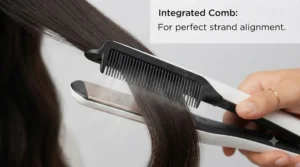
The standout here is the sheer volume and consistency of vapour the Steampod 3.0 produces, which is what lets it smooth genuinely resistant, thick hair in a single pass rather than the usual three or four. Key specs worth knowing: the plates run between 180°C and 210°C — noticeably cooler than most flat irons’ maximum settings — and the steam is generated continuously through a dedicated cartridge rather than a manual squeeze-bottle tank, which means even coverage from root to tip instead of patchy bursts. Based on the spec comparison with rival premium tools, the lower maximum temperature paired with continuous steam is precisely why L’Oréal Professionnel markets this as suitable for chemically treated or colour-damaged thick hair, where standard 230°C irons would be genuinely risky. Reviewers consistently report that hair feels noticeably softer and shinier straight after use compared with dry straighteners, and several long-term owners note they’ve stopped reaching for separate deep-conditioning treatments as often. What most buyers overlook is the learning curve: the built-in comb has to lead the plates through each section, and rushing that step is the single most common reason people say their first few sessions felt clunky.
Pros:
- ✅ Continuous steam gives even coverage on thick sections
- ✅ Lower max temperature reduces cumulative heat damage
- ✅ Doubles as a wave/curl styler with the same tool
Cons:
- ❌ Significant upfront investment compared with rivals
- ❌ Bulkier body than a standard flat iron
At the premium end of the £190-£235 range, the Steampod 3.0 only really justifies itself if you’re straightening several times a week or have hair prone to breakage — for occasional use, the value case weakens considerably.
2. Wet2Straight Pro — best for skipping the blow-dry entirely
What sets the Wet2Straight Pro apart is its venting system, which is engineered to pull moisture out of damp hair as steam while the plates work, so you can go from shower to styled without a hairdryer in between. The built-in moisture sensor reads how wet each section is and automatically adjusts plate temperature pass by pass, which in practice means less risk of scorching a patch that dried faster than the rest. Here’s what to weigh: this isn’t simply a faster straightener, it’s solving a completely different problem — the daily time cost of blow-drying thick hair, which for many people with dense, long hair genuinely eats fifteen to twenty minutes before straightening even starts. Aggregated customer feedback is notably split along one line: users with fine-to-medium thick hair report it works close to as advertised, while some with very dense, waist-length hair say they still need a partial dry first for full even results. On dry hair, it functions as a competent standard straightener, so it’s not wasted once your wet-styling phase is over.
Pros:
- ✅ Genuinely cuts blow-drying out of the routine
- ✅ Moisture sensor adjusts heat pass by pass
- ✅ Dual-mode: works on wet or dry hair
Cons:
- ❌ Very dense hair may still need a partial dry first
- ❌ Steam release can startle first-time users
Sitting in the £35-£55 range, the Wet2Straight Pro is arguably the best value pick here if your morning routine is genuinely time-starved rather than damage-focused.
3. Steam Straight ST492E — the dependable mid-range all-rounder
The Steam Straight ST492E‘s standout feature is its moisturising steam infusion system, which releases a controlled mist through titanium-ceramic plates rather than relying on plate coating alone to protect hair. In practice, that means five adjustable temperature settings from 150°C to 230°C, giving you genuine flexibility to run thick sections hotter and finer regrowth cooler, rather than being locked to one setting like many budget irons. Based on the spec sheet, the titanium-ceramic blend heats faster and more evenly than pure ceramic, which is precisely the kind of detail that matters on thick hair, where uneven heat means some strands get scorched while others barely straighten. Reviewers consistently note that the moisturising system leaves hair feeling less “crispy” than they expected from a mid-range tool, though a recurring theme in aggregated feedback is that the water tank needs topping up more often than premium alternatives during long sessions on very thick hair.
Pros:
- ✅ Five temperature settings suit mixed hair density
- ✅ Titanium-ceramic plates heat evenly
- ✅ Reputable mainstream brand with wide parts availability
Cons:
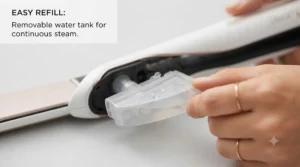
- ❌ Smaller water tank needs frequent refills on long hair
- ❌ Steam output is gentler than premium rivals
At £40-£65, the Steam Straight ST492E is the sensible middle ground for anyone who wants steam benefits without stretching to salon-tool pricing.
4. My Pro Steam Elixir — best for dry, frizz-prone thick hair
The defining feature of the My Pro Steam Elixir is its argan oil-infused ceramic coating, paired with steam that’s designed to work with the oil rather than just water vapour alone. The plates run across three to four temperature settings depending on the exact model variant, which is narrower than some rivals, but the trade-off is a coating genuinely built to deposit a light oil finish as you style, rather than just smoothing frizz mechanically. What most buyers overlook about this model is that the argan-infused plates only add real value if you’re also using an argan-based leave-in or serum beforehand — used alone on very dry hair, the effect is noticeably milder than the marketing suggests. Aggregated reviewer sentiment is broadly positive on shine and softness immediately after styling, with a recurring complaint that steam output can be inconsistent unless you hold the plates together firmly, a design quirk worth knowing before you buy rather than discovering mid-style.
Pros:
- ✅ Argan-infused plates add tangible shine
- ✅ Gentle steam suits already-dry, brittle thick hair
- ✅ Comes in a genuinely giftable presentation box
Cons:
- ❌ Steam generation needs firm, even plate pressure
- ❌ Fewer temperature settings than rival mid-range irons
Priced in the £65-£100 range depending on the exact edition, the My Pro Steam Elixir earns its place for anyone whose thick hair leans dry and dull rather than just unruly.
5. Steam Hair Straightener 40mm — cheap, cheerful, and honestly a bit basic
The headline feature on this budget pick is its ultrasonic steam spray, which breaks water down into fine steam ions rather than releasing plain vapour, in theory helping moisture penetrate the hair shaft rather than just sitting on the surface. The 40mm plate width and fourteen-speed adjustable temperature control (100°C-230°C) are respectable for the price bracket, and the 15ml water tank is genuinely one of the larger reservoirs among budget models we researched. On paper this means you’re getting temperature flexibility that punches above the price point, but the honest caveat is plate width: 40mm is narrower than most steam straighteners on this list, so thick, long hair takes noticeably more passes to fully cover. Reviewers in this price bracket consistently flag the trade-off as reasonable given the cost, though several note the steam function only activates reliably once the plates reach 160°C or higher, so it’s not instant from cold.
Pros:
- ✅ Genuinely wide 14-step temperature range
- ✅ Larger-than-average water tank for the price
- ✅ 60-minute auto shut-off for peace of mind
Cons:
- ❌ 40mm plates mean more passes on very thick hair
- ❌ Steam only kicks in above 160°C
Landing comfortably under £35, this is a legitimate contender if you’re after cheap steam straighteners for occasional use rather than a daily driver.
6. Steam Hair Straightener (Nano Titanium) — the entry-level pick for first-timers
This model’s standout is its side-vent steam hole design and included removable comb attachment, aimed squarely at people trying steam straightening for the first time without committing to a big spend. The nano titanium ceramic plates and five-level adjustable temperature give a reasonable spread for the price, and the 40ml removable water tank is unusually generous for an entry-level tool, refillable via the included mini kettle rather than an awkward built-in spout. Here’s what the spec sheet won’t tell you, but user reports suggest: the comb attachment genuinely helps beginners section thick hair evenly, which reduces the missed-strand problem that plagues a lot of first straightening attempts. Aggregated feedback repeatedly describes a short but real learning curve — several reviewers mention that filling the tank via the mini kettle feels fiddly compared with squeeze-bottle tanks on rival budget models, though most say it becomes second nature after two or three uses.
Pros:
- ✅ Generous 40ml tank for an entry-level tool
- ✅ Comb attachment helps beginners section hair
- ✅ Genuinely low price point for a full steam function
Cons:
- ❌ Kettle refill system feels fiddly at first
- ❌ Titanium coating is thinner than premium alternatives
Usually found under £30, this is one of the more convincing cheap steam straighteners on the market if you want to test the category before spending more.
7. Pro Steamline Pro — the 3-in-1 brush alternative
Rather than a traditional flat-plate design, the Pro Steamline Pro‘s standout feature is its triangular-bristle steam brush, built to grip and detangle short-to-medium strands in the same pass as straightening, rather than requiring a separate comb-through first. It runs on four adjustable temperature settings between 150°C and 210°C with universal 100V-240V voltage support, making it genuinely useful for travel, though it ships with a US-style plug so UK buyers will need an adaptor. Reviewers consistently note it’s noticeably faster on fine-to-medium thick hair than a flat-plate iron, since the brush covers a wider surface area per pass, but several also flag that on very coarse, tightly coiled hair it takes considerably longer than the brand’s flat-iron equivalent — closer to forty minutes for a full head, by some accounts. What the spec sheet won’t tell you is that brush-format steam tools generally struggle more than flat plates to fully straighten very thick roots, so it’s better suited as a smoothing and finishing tool than a heavy-duty root-to-tip straightener for coarse hair.
Pros:
- ✅ Detangles and straightens in a single pass
- ✅ Universal voltage genuinely useful for travel
- ✅ Faster than flat irons on fine-to-medium thickness
Cons:
- ❌ Ships with a US plug, needs a UK adaptor
- ❌ Slower and less thorough on very coarse, coily hair
In the £50-£65 range, this is a smart pick for anyone whose “thick hair” is more voluminous than coarse, but coarser hair types will likely get better results from one of the flat-plate options above.
Practical Usage Guide: Getting the Best From Your Steam Straightener
Getting good results from a steam straightener isn’t as simple as plugging it in and swiping through your hair. Fill the water tank with distilled or filtered water where possible — tap water’s mineral content builds up inside the reservoir over time and can eventually clog the steam vents, a problem that’s genuinely more common on budget models with narrower steam channels. Before your first full-head session, do a test pass on one small section to gauge how your specific hair density responds; thick hair often needs a slightly higher temperature than the default setting to get a clean result in one or two passes rather than five. In the first thirty days, the most common mistake people make is sectioning too broadly — thick hair needs smaller sections than fine hair for the steam to actually penetrate evenly, not just skim the surface layer. For maintenance, wipe the plates down with a damp cloth after they’ve fully cooled (never while hot) to prevent product build-up, which over weeks can start acting as an insulating layer that blunts heat transfer to the hair. Empty the water tank fully between uses rather than leaving standing water inside, since stagnant water sitting in a warm plastic reservoir is exactly the environment where mineral scale and, in humid bathrooms, mould can take hold.
Real-World Scenarios: Which Steam Straightener Matches Your Life
If you’re a university student with a 9am lecture and thick, wavy hair that frizzes the second it meets damp British weather, a budget option like the CkeyiN Steam Hair Straightener 40mm or the MKBOO Steam Hair Straightener makes more financial sense than a premium tool you’ll be too rushed to use properly most mornings — cheap steam straighteners under £60 genuinely cover this use case well. If you’re commuting into an office five days a week and showering at night, the Wet2Straight Pro solves a real logistical problem by letting you skip blow-drying on damp hair entirely, buying back time that compounds significantly over a working month. And if you’re someone who’s already invested in colour treatments or keratin smoothing and wants to protect that investment, the lower operating temperature and continuous vapour of the Steampod 3.0 is worth the higher outlay, since heat damage on chemically treated thick hair tends to be more visible and harder to reverse than on virgin hair.
Problem → Solution: Fixing Common Thick-Hair Straightening Issues
Frizz returning within hours of styling usually points to insufficient moisture sealing rather than a weak straightener — pairing your tool with a lightweight, non-oily leave-in before styling, and making sure the steam function is actually active rather than switched off, addresses this more reliably than simply raising the temperature. Uneven results with some sections dead straight and others still kinked typically comes down to sectioning too broadly for your hair’s density; halving your usual section size, particularly with models like the Steam Straight ST492E or My Pro Steam Elixir, solves this in most cases. If your straightener’s steam output feels weak or inconsistent, check whether the plates are being held together with even pressure throughout the pass, since several budget and mid-range models on this list — including the My Pro Steam Elixir — genuinely require firm, level contact to generate steam properly. Finally, if hair feels dry and brittle despite using a steam model, the culprit is very often tap water mineral build-up inside the tank rather than the tool itself; switching to distilled water usually restores expected performance within a few uses.
How to Choose Steam Straighteners for Thick Hair
- Prioritise plate width of at least 1 inch (25mm) — narrower plates mean more passes and more cumulative heat exposure on dense hair.
- Check the maximum temperature range covers at least up to 210-230°C, since coarse or resistant hair generally needs the higher end to straighten in one or two passes.
- Look at water tank capacity rather than just “has steam” as a headline feature — smaller tanks mean more mid-session refills on long, thick hair.
- Weigh continuous steam systems (like the Steampod 3.0) against manual squeeze or press-activated ones — continuous systems give more even coverage but usually cost more.
- Consider whether you need wet-to-dry functionality, like the Wet2Straight Pro offers, if cutting blow-drying time out of your routine matters to you.
- Check the plug and voltage spec carefully if you plan to travel, since models like the Pro Steamline Pro ship with non-UK plugs by default.
- Factor in genuine budget honestly — cheap steam straighteners under £60 can be entirely adequate for occasional use, but daily stylers on thick hair generally see better long-term results from mid-range or premium tools.
Common Mistakes When Buying Steam Straighteners for Thick Hair
The single most common mistake is assuming “steam” automatically means “better for thick hair,” when plate width and maximum temperature actually do more of the heavy lifting for dense hair specifically — a narrow-plate steam iron can still leave you doing eight passes per section. Another frequent pitfall is buying based on price alone and ending up with a tank too small for a full head of thick, long hair, meaning you’re stopping mid-style to refill, which extends your routine rather than shortening it. Buyers also regularly overlook voltage and plug compatibility, discovering only after unboxing that a bargain import needs an adaptor or, worse, isn’t rated for UK sockets at all — a genuine Electrical Safety First concern given how many uncertified straighteners have been flagged for exactly this issue. Finally, some shoppers assume steam function replaces the need for heat protectant entirely; in reality steam and a leave-in heat protectant work best together, not as substitutes for one another.
Steam Straighteners vs Traditional Straighteners
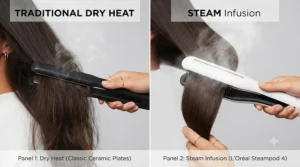
Traditional dry straighteners rely purely on direct heat to reshape the hair’s hydrogen bonds, which works, but tends to strip moisture from the hair shaft as it goes, particularly at the higher temperatures thick hair often needs. Steam straighteners introduce a controlled amount of water vapour alongside the heat, which softens the cuticle layer first, meaning the plates need to do less mechanical work to achieve the same straight result — in practice, that generally translates to fewer passes and less friction damage over repeated use. The trade-off is upfront cost and a slightly steeper learning curve: traditional irons are simpler to use straight out of the box, while steam models like the Steampod 3.0 or Wet2Straight Pro need you to understand tank filling, steam activation thresholds, and in some cases plate pressure technique. For thick or chemically treated hair specifically, the balance tips toward steam models, since the reduced pass count matters more the coarser and more heat-sensitive your hair is; for fine or already-healthy hair styled infrequently, a well-reviewed traditional straightener may simply be the more practical choice.
How Steam Vents Actually Work
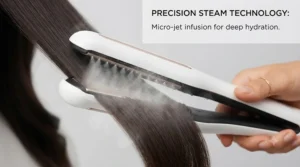
Steam vents are the small perforations along a straightener’s plate through which water, once heated past a certain threshold, is released as fine vapour rather than a steady drip. The number, size, and placement of steam vents materially affects performance: models with vents spread evenly along the full plate length, like the Steampod 3.0‘s continuous system, distribute moisture consistently from root to tip, while designs with vents clustered near one edge — common on some budget models — can leave uneven patches of steam exposure across a single pass. On thick hair specifically, vent placement matters more than raw steam volume, because dense sections need consistent contact with vapour across the whole width of the section, not just a burst near the entry point. A useful rule of thumb when comparing specs: straighteners describing “5 steam vents” or “7 steam holes” along a wide plate, like several models researched for this guide, tend to outperform single-vent or narrow-channel designs on thick hair, even when their advertised steam output sounds similar on paper.
Argan Oil Infusion: Genuine Treatment or Marketing Gloss?
Argan oil infusion refers to plates coated with, or steam systems designed to work alongside, argan oil — a nourishing plant oil, rich in fatty acids and vitamin E, that’s long been used in Moroccan hair care traditions, as documented on Wikipedia’s overview of argan oil. On a straightener, this typically means the plate coating is formulated to deposit a very light oil residue during styling, intended to add shine and reduce visible frizz on contact, as seen on the My Pro Steam Elixir in our line-up. The honest analysis here: argan-infused plates can genuinely add a noticeable shine boost immediately after styling, but the effect is topical and temporary, not a substitute for actual conditioning treatments applied before or after heat styling. For thick, dry, or colour-treated hair that already struggles with dullness, argan infusion is a reasonable bonus feature worth paying a little extra for; for healthy, well-conditioned hair, it’s a nice-to-have rather than a genuine game-changer, and reviewers’ aggregated feedback broadly reflects that distinction.
Moisture-Locking Technology Explained
Moisture-locking technology describes the mechanism by which steam straighteners aim to seal existing moisture inside the hair shaft during styling, rather than letting dry heat evaporate it outward, which is the core damage mechanism in traditional straightening. In practical terms, as the plates close around a section, released steam raises humidity right at the hair surface for a brief moment, which is thought to help the cuticle lie flatter and trap moisture beneath it as the plates then apply heat and pressure. Reviewers across multiple steam models, including the Steam Straight ST492E and the Wet2Straight Pro, consistently describe hair feeling less “crispy” or static-prone immediately after styling compared with their previous dry straighteners, which lines up with what the moisture-locking mechanism is designed to achieve. It’s worth being realistic about the limits here: moisture-locking reduces cumulative damage over time relative to dry heat, it doesn’t eliminate heat damage altogether, so pairing steam styling with a genuine heat protectant and sensible temperature choices still matters, particularly on already-thick, coarse hair that tends to need higher heat settings to begin with.
Cheap Steam Straighteners Under £60: What You Get, What You Sacrifice
Cheap steam straighteners under £60, like the two budget picks in our line-up, genuinely do deliver a working steam function, adjustable temperature, and reasonable plate quality for the price — this isn’t a category where you’re buying a gimmick. What you typically sacrifice compared with mid-range and premium models is plate width, water tank size, and steam consistency: budget tanks are smaller, meaning more mid-session refills on thick, long hair, and steam activation thresholds tend to be higher, so you’re waiting longer for the function to kick in. Reviewers consistently flag that cheap steam straighteners perform perfectly well for occasional use — a few times a week, shorter sessions — but show their limitations under daily, heavy use on very dense hair, where narrower plates and smaller reservoirs become genuinely limiting rather than minor quirks. If your budget caps out under £60 and you’re straightening thick hair daily, prioritise the largest water tank and widest plate you can find in that price bracket over extra temperature settings or cosmetic features, since those two specs affect your actual day-to-day experience far more.
✨ Don’t Miss These Exclusive Deals!
🔍 Take your hair care routine to the next level with one of the seven steam straighteners for thick hair covered above. Click through to check current pricing and availability on any model that caught your eye — the right steam straightener could mean fewer passes, less frizz, and genuinely healthier-looking hair by the end of the week!
Long-Term Cost & Maintenance
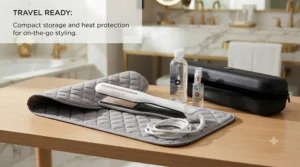
Looking beyond the sticker price, the real cost of a steam straightener includes water filter or descaling habits, replacement of any argan or serum cartridges on models that use them, and — for cheaper models — a shorter realistic lifespan under daily heavy use. Budget picks like the CkeyiN and MKBOO models researched here typically run £20-£35, but if daily thick-hair styling wears them out within twelve to eighteen months, replacing one every year or so can add up to a similar total spend as one mid-range or premium tool that lasts several years. Premium tools like the Steampod 3.0 carry ongoing costs too, since the official styling range (straightening milk, cream, serum) is designed to be used alongside it, though the iron itself functions perfectly well without the accessory range if you’re managing costs. A sensible rule of thumb: if you’re styling daily and have genuinely thick or coarse hair, a mid-range tool in the £40-£100 bracket, maintained with distilled water and regular plate cleaning, will usually work out cheaper over three years than repeatedly replacing a £20 budget unit that degrades under heavy use.
Safety, Regulations & Compliance for Steam Straighteners in the UK
Any steam straightener sold legitimately in the UK should carry a UKCA or CE mark confirming it meets UK electrical safety requirements, and it’s worth checking for this before purchasing from third-party marketplace sellers rather than assuming it’s automatically present, as outlined in official UK government guidance on product marking. Steam straighteners carry an added consideration beyond standard flat irons: the water reservoir and steam vents mean genuine care is needed to avoid liquid contacting live electrical components, so always fill the tank exactly as instructed and never while the straightener is plugged in. Basic safety habits matter regardless of which model you choose — unplug the straightener when not actively styling, never leave it switched on and unattended, and store it out of reach of children once it’s cooled, since plates can remain hot enough to burn for a considerable time after use. If you’re buying a budget or lesser-known brand, checking recent product safety notices before purchase is a sensible extra step, given how frequently uncertified imported straighteners are flagged for genuine electrical hazards.
Frequently Asked Questions
❓ Are steam straighteners actually better for thick hair than normal ones?
❓ How often should I use a steam straightener on thick hair?
❓ Do I need distilled water for a steam hair straightener?
❓ Can steam straighteners damage colour-treated thick hair?
❓ What's the difference between a steam straightener and a steam brush?
Recommended for You
- Ionic Straighteners for Frizzy Hair: 7 Best Picks 2026
- Ionic vs Ceramic Straighteners: 7 Top UK Picks for 2026
- 7 Best Ionic Straighteners for Fine Hair 2026: Budget to Premium
Disclaimer: This article contains affiliate links. As an Amazon Associate, I earn from qualifying purchases. If you purchase products through these links, we may earn a small commission at no additional cost to you.
✨ Found this helpful? Share it with your friends! 💬🤗
