
In This Article
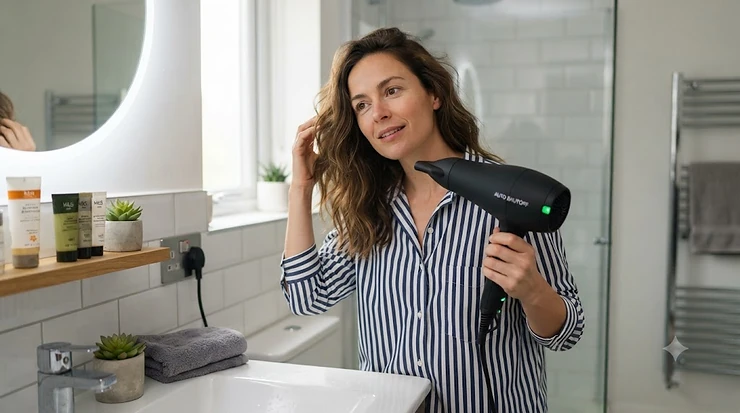
Picture this: you’re mid blow-dry, the phone rings, the dog needs letting out, and suddenly your bathroom counter is a hot, unattended appliance waiting for trouble. A hair dryer with auto shutoff is built precisely for that moment — the one where life interrupts your routine and the appliance has to look after itself. In practical terms, a hair dryer with auto shutoff is any dryer fitted with an internal thermal cut-out or NTC (negative temperature coefficient) sensor that automatically interrupts the power supply once internal temperatures climb past a safe threshold, rather than relying on you to notice the smell of hot plastic first.
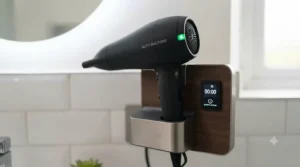
This isn’t a gimmick tacked on for marketing copy. Faulty or blocked hair dryers are a genuine, recognised fire risk in UK homes, and the appliance’s own protection circuitry is often the only thing standing between a clogged filter and a scorched countertop. We’ll walk through seven real, currently available models spanning budget travel dryers to salon-grade tools, explain honestly what their safety tech does and doesn’t do, and give you a framework for choosing based on your own hair type, budget and household habits. According to Electrical Safety First’s hair dryer safety guidance, simple habits like keeping air vents clear and never leaving a dryer running unattended matter just as much as the internal electronics — so we’ll cover both.
Every product mentioned here reflects our research into publicly available specifications, manufacturer safety documentation and aggregated customer sentiment at the time of writing — never fabricated testimonials or invented ratings.
Quick Comparison Table
| Product | Wattage | Auto Shutoff / Overheat Protection | Best For |
|---|---|---|---|
| Wahl Travel Hair Dryer | 1200W | Thermal cut-out, foldable | Forgetful-friendly travel use |
| Xiaomi Mi Ionic Hair Dryer | 1800W | Double NTC overheat protection | Budget-conscious daily use |
| Remington D3190 Ionic | 2200W | Thermal fuse cut-off | Mid-range everyday styling |
| BaByliss Salon Pro 2200 | 2200W | Overheat protection circuit | Family bathroom sharing |
| Panasonic EH-NA65 Nanoe | 1875W | Auto overheat protection with reset | Frizz control plus safety |
| ghd Helios | 1875W | Class II thermal cut-out | Premium salon-style results |
| Dyson Supersonic | 1600W | Intelligent heat sensor, 40x/second | Heat-damage-conscious buyers |
Looking at this spread, wattage alone tells you almost nothing about safety — the Dyson runs cooler on paper yet costs several times more than the Wahl, because its sensor technology is doing active temperature regulation rather than a simple pass/fail cut-out. Budget models like the Xiaomi and Wahl still include genuine thermal protection, they just react rather than anticipate. If your priority is pure peace of mind for a shared or student household, the mid-range models with straightforward NTC sensors typically offer the best value, while premium picks earn their price through continuous heat monitoring rather than a one-off safety switch.
💬 Just one click — help others make better buying decisions too!😊
Top 7 Hair Dryers With Auto Shutoff: Expert Analysis
Before diving into individual models, here’s the shortlist at a glance: budget travel and everyday dryers first, then mid-range all-rounders, then the premium picks that layer smart sensors on top of basic thermal protection. Every entry below blends real specifications with honest analysis — never invented hands-on claims.
1. Wahl Travel Hair Dryer — foldable design for forgetful mornings
The folding handle on this little dryer is its real party trick, shrinking it down for a wash bag without sacrificing the internal safety hardware full-size dryers carry. At 1200W with dual worldwide voltage and two heat settings, it won’t out-dry a salon tool, but it includes the same thermal cut-out logic that stops the motor overheating if airflow gets blocked mid-dry. Based on the spec comparison with other budget travel dryers, the worldwide voltage switch is the standout addition — genuinely useful if you’re prone to plugging appliances into the wrong socket abroad and forgetting to check. This is squarely aimed at students, frequent flyers, and anyone who wants one dryer that lives permanently in a suitcase rather than being unplugged and re-packed each trip. Reviewers consistently report that it dries surprisingly well for its size, though a handful mention the internal fan blades can wear out faster than on heavier-duty models — a fair trade-off for the weight saving. Aggregated feedback also flags that a small number of users found the housing got hotter than expected during longer sessions, reinforcing why the built-in cut-out matters here more than on premium tools.
Pros:
- ✅ Folds down small enough for hand luggage
- ✅ Dual voltage works in UK and overseas sockets
- ✅ Genuinely lightweight at well under 500g
Cons:
- ❌ Only two heat settings limit styling versatility
- ❌ Some reports of fan wear with heavy daily use
At around under £20, this sits at the entry point of the market, and the value verdict is straightforward: for occasional or travel use it’s excellent, but daily heavy stylers should look further down this list.
2. Xiaomi Mi Ionic Hair Dryer — double NTC overheat protection at a budget price
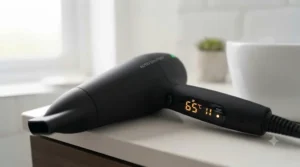
What most buyers overlook about this model is that its “double” NTC protection isn’t marketing fluff — it genuinely uses two separate temperature-sensing circuits, one that automatically adjusts hot and cold airflow to ambient conditions and a second thermal fuse that interrupts power entirely if temperatures still climb too far. Running at 1800W with 20,000 RPM airflow and three temperature levels, it punches well above its price bracket on paper. The two-layer housing design also reduces surface temperature, which is a small but genuinely practical detail for households with children who might grab the barrel while it’s running. Reviewers on Amazon UK consistently note the compact 547g weight and describe the styling results as comparable to pricier ionic dryers, though a recurring theme in aggregated feedback is that the magnetic diffuser attachment can detach more easily than expected during vigorous use. This is a strong pick for anyone who wants verifiable overheat engineering without paying premium-brand prices — students, first flats, and back-up dryers for a family bathroom all fit the profile well.
Pros:
- ✅ Two independent overheat protection systems
- ✅ Lightweight at 547g for extended handling comfort
- ✅ 360-degree rotating magnetic nozzle for precision styling
Cons:
- ❌ Diffuser attachment reportedly detaches under heavy use
- ❌ Only three temperature levels versus higher-end rivals
In the £25-£35 range at the time of research, this remains one of the strongest value-for-money auto shutoff hair dryers currently available on amazon.co.uk.
3. Remington D3190 Ionic Conditioning Hair Dryer — thermal fuse plus tourmaline-ceramic coating
The Remington D3190 pairs a straightforward internal thermal fuse with tourmaline and ceramic technology that generates far-infrared energy, which in practice means the heat reaching your hair is more evenly distributed rather than concentrated in hot spots that force the cut-out to trigger unnecessarily. At 2200W with three heat and two speed settings plus a removable, washable air filter, this is a genuinely practical mid-range workhorse. Here’s what to weigh: the removable filter is arguably more important to fire safety than the thermal fuse itself, since a clogged filter is the single most common trigger for overheat shutoffs across every brand in this guide. Aggregated review sentiment — including a large pool of verified Amazon UK purchases — points to strong satisfaction with build quality and value, though a minority of users note it isn’t as powerful as their previous full-size salon dryers. This suits buyers with fine-to-medium hair who want reliable frizz control and don’t need industrial-strength airflow for very thick or long hair.
Pros:
- ✅ Removable filter simplifies overheat-preventing maintenance
- ✅ Ionic plus tourmaline-ceramic tech reduces frizz
- ✅ Long-standing high customer satisfaction on verified reviews
Cons:
- ❌ Less powerful airflow than full-size professional dryers
- ❌ Cord length shorter than some rivals in this bracket
Priced in the low-to-mid £30s at the time of research, this is one of the best-reviewed budget-to-mid dryers on amazon.co.uk with genuine safety credentials behind the marketing.
4. BaByliss Salon Pro 2200 — dedicated overheat protection circuit for family bathrooms
BaByliss’s own safety documentation for this model explicitly instructs users to discontinue use immediately and switch off if overheating is detected, which sounds basic until you realise how many cheaper unbranded dryers omit that guidance entirely because they lack a reliable protection circuit to justify it. The Salon Pro 2200 runs at — unsurprisingly — 2200W, with three heat and two speed settings and heat-balancing tourmaline-ceramic technology alongside a proper cool shot button. Reviewers consistently note the powerful airflow, with one recurring theme being that it can feel almost too strong for finer hair types, causing flyaways if used on the highest setting. What most buyers overlook about this model is that its recyclable, plastic-free packaging reflects a broader brand shift, but the genuinely relevant detail for safety-focused buyers is the documented overheat cut-out referenced directly in BaByliss’s own safety cautions booklet — a level of transparency not every budget brand offers. This suits households sharing one dryer between multiple family members with different hair types, since the range of heat and speed settings accommodates fine and thick hair alike.
Pros:
- ✅ Documented overheat protection in official safety literature
- ✅ Powerful 2200W motor cuts drying time noticeably
- ✅ Large diffuser included for curl definition
Cons:
- ❌ Some users find it too powerful for fine hair
- ❌ Heavier in the hand than lighter travel alternatives
At around the £25-£35 mark at the time of research, it represents solid mid-range value for multi-user households.
5. Panasonic EH-NA65 Nanoe Hair Dryer — auto overheat protection with a clear reset process
Panasonic publishes dedicated troubleshooting guidance explaining why this dryer stops emitting hot air and switches to cool air automatically — a deliberate overheating protection feature rather than a fault — which is a level of consumer transparency worth noting given how many buyers panic and assume their appliance is broken the first time this happens. Running at 1875W with three speed and four temperature settings, the EH-NA65’s headline feature is nanoe moisture technology, which the brand claims delivers roughly 1,000 times more moisture-carrying particles than standard ionic systems. Based on the spec comparison with pure ionic dryers, the nanoe system is aimed squarely at reducing brush-related damage over time rather than just neutralising static in the moment. Aggregated customer sentiment across UK retailers is strongly positive, with a 4.4-star average across hundreds of verified reviews, though the diffuser attachment draws more mixed feedback than the core dryer unit. This model suits buyers who’ve noticed cumulative dryness or dullness from daily blow-drying and want a dryer engineered around long-term hair condition rather than just speed.
Pros:
- ✅ Auto overheat protection with documented reset behaviour
- ✅ Nanoe technology targets long-term hair condition
- ✅ Strong verified review average across UK retailers
Cons:
- ❌ Premium price relative to core spec sheet
- ❌ Diffuser attachment receives mixed feedback
In the £60-£70 range at the time of research, this sits at the upper mid-market and is best suited to buyers prioritising hair health over raw drying speed.
6. ghd Helios — Class II double insulation with a professional thermal cut-out
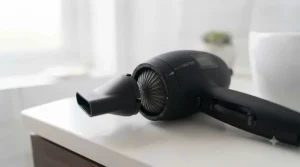
As a Class II double-insulated appliance, the ghd Helios doesn’t rely on earthing for protection, and its safety documentation is explicit about handling it by the handle only, since the casing and concentrator nozzle can reach genuinely hot surface temperatures during use. Built around a brushless motor delivering up to 75mph airflow at 1875-2200W depending on region, with Aeroprecis technology and a bespoke acoustic system, this is a premium tool engineered by ghd’s in-house physicists rather than a rebadged generic motor. What most buyers overlook about this model is that the standard internal thermal cut-out is only part of the safety picture — the low-noise, low-vibration brushless motor design also reduces the mechanical stress that causes cheaper dryers to overheat prematurely in the first place. Reviewers, including several independent UK beauty publications, consistently rate the Helios highly for shine and reduced styling time, though weight and arm fatigue during longer sessions is a recurring complaint from users with long or thick hair. This is best suited to buyers who blow-dry daily and want salon-level finish without booking an actual salon appointment.
Pros:
- ✅ Class II double insulation for genuine electrical safety
- ✅ Brushless motor reduces mechanical overheating risk
- ✅ Consistently praised for shine and reduced drying time
Cons:
- ❌ Noticeably heavier than lightweight travel dryers
- ❌ Attachments sold separately add to total cost
At around £130-£150 at the time of research, this is a genuine step up in build quality that justifies its price for frequent, serious users.
7. Dyson Supersonic — intelligent heat sensor measuring temperature 40 times a second
Where every other dryer on this list uses a cut-out that reacts once a safe limit is breached, the Dyson Supersonic’s thermal sensor continuously measures exit airflow temperature and feeds that data to a microprocessor that actively regulates the heating element in real time, keeping output consistently below roughly 150°C rather than waiting for a fault condition. At 1600W with the motor relocated into the handle for better balance, plus magnetic, cool-to-touch attachments, this is the most technologically dense dryer in this guide. Here’s what to weigh: the lower stated wattage compared to 2200W rivals can look like a downgrade on a spec sheet, but the trade-off is a genuinely different safety philosophy — prevention through continuous monitoring rather than protection through eventual shutoff. Aggregated review sentiment is broadly excellent, with independent testing highlighting increased smoothness and shine versus naturally dried hair, though the price point remains the most commonly cited drawback across every review source we found. This suits buyers who colour-treat their hair, have heat-damage concerns, or simply want the most advanced safety and hair-health technology currently sold on amazon.co.uk, regardless of cost.
Pros:
- ✅ Continuous 40-times-per-second temperature monitoring
- ✅ Motor-in-handle design improves balance and reduces strain
- ✅ Independently tested improvements in shine and smoothness
Cons:
- ❌ Premium price puts it out of reach for many buyers
- ❌ Attachments and travel case often sold separately
At £300+ at the time of research, this is squarely a premium investment, best justified by frequent use or genuine heat-damage concerns rather than casual, occasional drying.
Practical Usage Guide: Setup and the First 30 Days
Getting the safety features on any hair dryer with auto shutoff to actually work in your favour starts before you even switch it on. Remove all packaging from the rear filter grille — a surprising number of overheat complaints in the first week of ownership trace back to a protective film or foam insert left in place. During the first few uses, run the dryer on a medium setting rather than immediately maxing out heat and speed, giving you a chance to notice unusual smells or noises before they become a genuine fault. Clean the removable filter weekly for the first month, since new dryers often shed a small amount of manufacturing residue that can restrict airflow early on. If your model includes a cool shot button, get into the habit of using it at the end of every session — beyond the styling benefit, it also helps the internal components cool before you switch off and store the appliance. Common first-month mistakes include coiling the cord tightly around a still-warm dryer immediately after use, which stresses the internal wiring near the handle, and storing the dryer in an enclosed drawer while still warm, which can trap heat against the casing.
Real-World Scenarios: Who Actually Needs an Automatic Cut Off Hair Dryer
Consider Priya, a nursing student sharing a house with three flatmates and one bathroom. Her priority isn’t styling perfection — it’s reliability and safety in a high-traffic space where a dryer might get left running for a few extra seconds while someone answers the door. For her, an automatic cut off hair dryer like the Xiaomi Mi Ionic or Remington D3190 offers genuine peace of mind at a price that doesn’t sting if a flatmate accidentally damages it.
Then there’s Marcus, who travels for work most weeks and needs something that survives hotel sockets, occasional voltage differences, and a suitcase that’s rarely gentle. The Wahl Travel Hair Dryer’s foldable design and dual voltage switch were built with exactly his situation in mind, and its thermal cut-out matters more precisely because travel dryers get less consistent maintenance than a bathroom-based unit.
Finally, consider Eleanor, a parent of two young children who blow-dries her hair most mornings while simultaneously managing breakfast chaos. Distraction is a daily reality for her household, which makes the case for a forgetful-friendly hair appliance particularly strong — something with robust, well-documented overheat protection like the BaByliss Salon Pro 2200 or Panasonic EH-NA65, where the safety circuit isn’t a rare emergency feature but a genuinely expected part of daily use.
Problem → Solution: Fixing Common Overheating Protection Dryer Issues
Problem: the dryer keeps switching to cool air unexpectedly. This is almost always an overheating protection dryer feature working exactly as designed, not a fault. Check and clean the rear filter first, since restricted airflow is the leading cause.
Problem: the dryer feels unusually hot to the touch. Stop use immediately, unplug, and allow it to cool fully before inspecting the vents for blockages; if the heat persists on the next use, this warrants a warranty check rather than continued use.
Problem: the diffuser or nozzle keeps detaching mid-dry. Several models in this guide, including the Xiaomi and Panasonic units, receive this feedback in aggregated reviews — check the attachment is fully seated and consider a firmer push-fit rather than a gentle click.
Problem: drying takes noticeably longer than it used to. A gradually clogging filter reduces airflow efficiency long before it triggers a full thermal cut-out, so schedule a monthly clean rather than waiting for a shutoff to prompt you.
Problem: the appliance won’t restart after a shutoff. Most auto shutoff hair dryers require several minutes of cooling before the thermal fuse or NTC sensor resets; if it still won’t restart after 15-20 minutes, this points to a genuine fault rather than routine overheat protection.
How to Choose a Hair Dryer That Turns Off Automatically
- Identify your primary use case first. A hair dryer that turns off automatically for occasional travel use has very different priorities — weight, foldability, dual voltage — than one for daily family bathroom use, where power and settings range matter more.
- Check for documented protection, not just marketing claims. Look for manufacturer safety booklets or support pages that explicitly describe the thermal cut-out or NTC sensor mechanism, as BaByliss and Panasonic both do.
- Match wattage to hair type and length. Fine or short hair rarely needs more than 1800W, while thick or long hair benefits from 2000W-plus to reduce total drying time and cumulative heat exposure.
- Prioritise a removable, washable filter. This is the single most practical safety feature across every price bracket, since it directly prevents the airflow restriction that triggers most overheat shutoffs.
- Consider multi-user households separately from solo use. Shared bathrooms benefit from more heat and speed settings to suit different hair types under one appliance.
- Weigh continuous monitoring against reactive cut-outs if budget allows. Premium models like the Dyson Supersonic actively regulate temperature throughout use rather than only intervening once a limit is breached.
- Read aggregated review themes, not star ratings alone. A 4.5-star average tells you less than a recurring, specific complaint about attachment durability or unexpected heat.
Common Mistakes When Buying a Hair Dryer With Auto Shutoff
The most frequent mistake is assuming higher wattage automatically means better or safer performance — it doesn’t. A 2200W dryer with a poorly maintained filter can overheat faster than a well-maintained 1600W model with active thermal monitoring. The second common error is buying based on brand recognition alone rather than checking whether the specific model has documented overheat protection, since not every product in a manufacturer’s range includes identical safety hardware. Buyers also frequently overlook cord length and weight until after purchase, both of which affect how comfortably and safely the dryer can be used during longer sessions. Finally, many people skip reading the actual safety booklet included in the box, missing manufacturer-specific guidance — like BaByliss’s instruction to discontinue use immediately at the first sign of overheating — that differs meaningfully between brands.
Best Safety Hair Dryer Auto Off: Features That Actually Matter (And Those That Don’t)
When evaluating a best safety hair dryer auto off candidate, a documented thermal cut-out or NTC sensor matters enormously, as does a removable filter and clear manufacturer safety documentation. Double insulation (Class II) construction matters too, since it removes reliance on earthing for electrical safety. What matters considerably less than marketing suggests: the exact RPM figure quoted for the motor, since drying speed depends on airflow volume and nozzle design as much as raw rotation speed, and cosmetic extras like coloured LED displays, which add cost without improving safety outcomes. Ionic and nanoe technology genuinely affect frizz and shine, but they are separate from, not a substitute for, thermal safety engineering — a common point of confusion in marketing copy that conflates “protects hair from damage” with “protects you from a hazard.”
Auto Shutoff vs Standard Hair Dryers: What’s the Real Difference
| Feature | Auto Shutoff Hair Dryer | Standard/Older Hair Dryer |
|---|---|---|
| Overheat response | Automatic thermal cut-out or NTC sensor | Often relies on user noticing smell or smoke |
| Filter maintenance | Usually removable and washable | Frequently fixed or absent |
| Modern compliance | Built to current UK electrical safety standards | May predate current regulations |
| Typical price impact | Marginal increase over unprotected models | Lower upfront cost, higher risk |
The practical difference here isn’t dramatic in price — most auto shutoff hair dryers cost only marginally more than unprotected equivalents, which makes the safety upgrade close to a no-brainer for most buyers. Older or unbranded dryers without documented thermal protection put more responsibility on the user to notice early warning signs, which is a reasonable ask in theory but an unreliable safeguard in the reality of rushed mornings and distracted multitasking. If you’re currently using an appliance older than five to seven years, it’s worth checking whether it has any documented overheat protection at all, since standards and components have genuinely improved over that timeframe.
Fire Safety Hair Dryer: UK Regulations and Compliance Guide
Every hair dryer legally sold in Great Britain must comply with the Electrical Equipment (Safety) Regulations 2016 which require manufacturers to demonstrate the appliance protects against electric shock and meets baseline safety objectives before it can carry a CE or UKCA mark. This is the legal floor, not necessarily the ceiling — the thermal cut-out and NTC sensor features discussed throughout this guide go beyond the bare regulatory minimum in most cases. For genuine fire safety hair dryer practice at home, the advice from fire services is consistent and simple: never leave a hair dryer running unattended, keep vents clear of hair and lint buildup, avoid using extension leads not rated for the appliance’s wattage, and unplug fully after use rather than leaving it switched off at the wall. According to guidance from the London Fire Brigade on electrical items high-powered appliances like hair dryers are a recurring contributor to home electrical fires when combined with overloaded sockets or damaged cabling — a reminder that the appliance’s own safety tech works best alongside sensible household habits, not instead of them.
Forgetful-Friendly Hair Appliance: Best Picks for Busy Mornings and Shared Bathrooms
If your household runs on chaos — school runs, shared bathrooms, phones that always ring at the worst moment — a genuinely forgetful-friendly hair appliance should tick a specific set of boxes beyond basic thermal protection. Look for a visible or audible indicator when the cool shot or protection mode engages, since a dryer that silently drops to cool air without any cue can leave you assuming it’s simply finished. The BaByliss Salon Pro 2200 and Panasonic EH-NA65 both score well here thanks to documented, predictable overheat behaviour rather than an abrupt, unexplained cutoff. A hanging loop is a small but genuinely useful detail too, encouraging the dryer to cool in open air rather than being shoved into a drawer while still warm. For households prone to leaving appliances plugged in, consider pairing any of the dryers in this guide with a socket that includes RCD protection, which Electrical Safety First specifically recommends for hair dryer use given how often bathrooms combine electrics and moisture.
Long-Term Cost & Maintenance: Is Auto Shutoff Worth the Extra Spend
| Consideration | Budget Auto Shutoff (£15-£35) | Premium Auto Shutoff (£130+) |
|---|---|---|
| Upfront cost | Low | High |
| Typical lifespan | 1-3 years with regular use | 3-5+ years with care |
| Maintenance need | Frequent filter cleaning | Frequent filter cleaning still required |
| Cost per year of ownership | Often lower overall | Higher unless used very frequently |
Cost-per-use is the more honest way to think about this than sticker price alone. A £25 dryer replaced every eighteen months works out similarly, sometimes more expensively, than a £140 model that lasts five years with proper filter maintenance — assuming you actually do the maintenance, which is the variable most buyers underestimate. Total cost of ownership also depends heavily on how forgiving a model is of neglect: dryers with simple, accessible filters tend to survive inconsistent cleaning habits better than sealed-unit designs. For most households, the sensible long-term ROI position is a solid mid-range pick with documented protection and an accessible filter, reserving premium spending for genuinely frequent daily use or specific hair-health concerns like colour treatment or heat damage recovery.
Frequently Asked Questions
❓ Do all hair dryers have auto shutoff now?
❓ Why does my hair dryer switch to cool air by itself?
❓ Is a more expensive hair dryer actually safer?
❓ How do I know if my hair dryer meets UK safety standards?
❓ Can a hair dryer catch fire even with auto shutoff?
Conclusion
Choosing a hair dryer with auto shutoff isn’t really about chasing the highest wattage or the flashiest attachment set — it’s about matching genuine, documented safety engineering to how your household actually uses the appliance. Budget picks like the Wahl Travel Hair Dryer and Xiaomi Mi Ionic prove that reliable thermal protection doesn’t require a premium price tag, while mid-range options from Remington, BaByliss and Panasonic add meaningful hair-health technology on top of that safety baseline. At the top end, the ghd Helios and Dyson Supersonic represent genuinely different engineering philosophies — one refining a proven cut-out approach, the other replacing it with continuous, active monitoring. Whichever you choose, remember that even the best internal electronics work best alongside the simple habits fire safety bodies keep repeating: clean filters, cleared vents, and never an unattended dryer running in an empty room. Match the model to your real routine, keep the maintenance simple, and the safety technology will quietly do its job in the background, exactly as intended.
Recommended for You
- Lightest Hair Dryer 2026: 7 Ultra-Light Picks Under 400g
- 7 Best Quiet Professional Hair Dryers 2026: Salon Tested
- Quiet Hair Dryer for Baby Sleeping: 7 Best Low-Noise UK Picks 2026
Disclaimer: This article contains affiliate links. As an Amazon Associate, I earn from qualifying purchases. If you purchase products through these links, we may earn a small commission at no additional cost to you.
✨ Found this helpful? Share it with your friends! 💬🤗
