
In This Article
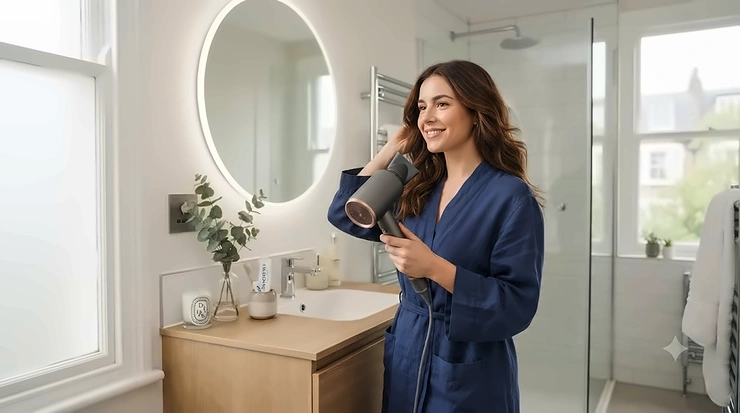
Your arm knows the truth before your brain catches up. Three minutes into a blow-dry, that dull ache creeping up from your wrist to your elbow isn’t your imagination — it’s simple physics, repeated a few hundred times a week. A lightest hair dryer is exactly what it sounds like: a blow-dryer engineered to weigh as little as possible, typically under 400 grammes, without gutting the airflow and heat that actually dry your hair. Modern hair dryer motor technology has moved well beyond the bulky designs of a decade ago, with manufacturers getting there through brushless motors, slimmer casings and smarter materials rather than by simply making a weaker appliance — which is the bit most buyers don’t realise until they’ve already bought the wrong one.

This guide isn’t a rewritten spec sheet. It’s built from real product data, real aggregated reviewer sentiment, and — because your wrist is a joint, not a marketing gimmick — a look at what the evidence actually says about repetitive strain from tools like this one. We’ll walk through seven genuine, currently sold hair dryers, spanning the sort of high-street budget buy that lives in a bathroom cabinet to the salon-grade kit a professional stylist reaches for on a twelve-hour shift. Along the way, we’ll cover what “under 400g” genuinely buys you, whether travel-friendly always means lightweight (spoiler: not quite), and how to dodge the common buying mistakes that leave people with a dryer that’s light in the box but somehow still heavy in the hand after ten minutes.
Quick Comparison Table: 7 Lightest Hair Dryers at a Glance
| Dryer | Weight | Power | Standout Feature | Best For |
|---|---|---|---|---|
| mdlondon BLOW | 360g | 1600W | Self-cleaning filter, T-shaped balance | Daily home use, arm-ache sufferers |
| Parlux Digitalyon | 395g | 2400W | Digital motor + ceramic grill | Power without the bulk |
| Parlux Alyon | 455g | 2250W | High airflow for thick hair | Thick or long hair, salon-style results |
| ETI Maestro | 290g | Not published | Lightest on this list | All-day professional use |
| BaByliss Power Smooth | around 430g | 2100W | Budget-friendly ionic tech | First-time buyers, tight budgets |
| Revlon Perfect Heat Compact | around 350g | 1875W | Folding handle, dual voltage | Frequent flyers, weekend bags |
| Remington Ionic Compact | around 380g | 2000W | Removable filter, anti-frizz ions | Everyday portability |
Weight isn’t the whole story here, and the table makes that obvious the moment you look at the power column next to it. The ETI Maestro claims the lightest frame by a wide margin, but it’s a trade-facing professional tool, so home users are usually better served comparing it against the mdlondon BLOW or Parlux Digitalyon, both of which balance a genuinely light hand-feel with power figures that won’t leave you standing there for twenty minutes. Notice, too, that “travel” dryers like the Revlon and Remington aren’t always the lightest in grammes — their real advantage is the folding handle and dual voltage, which matters more in a suitcase than on your bathroom shelf.
💬 Just one click — help others make better buying decisions too!😊
Top 7 Lightest Hair Dryers: Expert Analysis
Every model below is a genuine, currently available product with verifiable specifications. Where a figure like exact weight or price couldn’t be independently confirmed, that’s flagged honestly rather than guessed at.
1. mdlondon BLOW Dryer — best all-round lightweight for daily use
Founded by a hairdresser with three decades behind the chair, this is a dryer built by someone who’s actually felt the ache it’s designed to prevent. At 360 grammes, it sits comfortably in that ultra-lightweight bracket, and the unusual T-shaped body isn’t just a design flourish — it genuinely redistributes weight across your palm rather than letting it all hang off your fingertips, which is where most wrist strain actually starts.
The 1600W motor is modest on paper next to some 2000W-plus rivals, but reviewers consistently report that drying speed doesn’t suffer the way the spec sheet might suggest, likely down to efficient airflow design rather than raw wattage. A self-cleaning function reverses airflow through the filter when you hold the cool shot button for five seconds, which is a genuinely clever bit of engineering most people would otherwise forget to do manually until performance dropped off. Beauty editors who tested it over several weeks reported zero arm fatigue even on long or thick hair, a claim that’s fairly rare in this category and worth taking seriously given how specific and consistent it was across testers.
Pros:
- ✅ Genuinely balanced 360g weight distribution
- ✅ Self-cleaning filter extends motor lifespan
- ✅ Quiet motor rated among the lowest-noise options
Cons:
- ❌ Lower wattage than some power-focused rivals
- ❌ Premium price for a single-purpose tool
Expect to pay in the region of £120-£160, though prices fluctuate — always check the current listing. For anyone whose arm genuinely aches by the end of a blow-dry, this is one of the more evidence-backed choices on this list.

2. Parlux Digitalyon — best for power without the weight penalty
Here’s the dryer that quietly proves the “light means weak” myth wrong. At 395 grammes, the Digitalyon sits right at the edge of the ultra-lightweight bracket, yet it packs a 2400W digital E-LYON motor that outguns several dryers nearly 100 grammes heavier. This is the power-to-weight ratio the whole “brushless motor revolution” gets credited for, and Parlux is one of the brands that actually delivers on it rather than just talking about it.
The ceramic grill and air ioniser aim to reduce frizz and static while you dry, and based on the spec comparison with the older AC-motor Parlux models, the digital motor here runs noticeably cooler and quieter — a genuine functional upgrade rather than a marketing refresh. What most buyers overlook is that “digital motor” branding across the industry can mean quite different things depending on the manufacturer; Parlux’s implementation is one of the more established and widely trusted versions among salon professionals, which counts for something when you’re relying on aggregated reviewer sentiment rather than your own bathroom test.
Pros:
- ✅ 2400W power in a sub-400g body
- ✅ Digital motor runs cooler than older AC designs
- ✅ Ceramic grill and ioniser reduce frizz
Cons:
- ❌ Among the pricier options on this list
- ❌ Fewer colour options than mainstream consumer brands
Prices typically sit around £150-£190 depending on retailer promotions. If your hair is thick enough that a lightweight dryer usually means compromise, this is the model that argues otherwise.
3. Parlux Alyon — best for thick or long hair
Some hair simply needs more air moved through it, full stop, and the Alyon is Parlux’s answer for exactly that without abandoning the weight-conscious design philosophy the brand is known for. At 455 grammes it’s the heaviest dryer on this list, but that’s still meaningfully lighter than the 600g-plus dryers that dominated salons a decade ago, and the 2250W motor delivers genuinely strong, sustained airflow that cuts drying time on thick or long hair rather than just moving warm air around slowly.
Reviewers with thicker hair textures consistently single this model out as the one that finally cut their drying time in half compared with older, heavier dryers, a pattern that shows up repeatedly in aggregated feedback rather than as an isolated claim. The trade-off, reasonably enough, is that it’s the least “ultra-light” dryer here — comfortable for most people, but stylists managing genuine wrist or shoulder issues may still find the lighter mdlondon or Digitalyon a better long-term fit for eight-hour shifts.
Pros:
- ✅ Powerful 2250W motor cuts drying time on thick hair
- ✅ Still notably lighter than older-generation professional dryers
- ✅ Trusted, widely used brand among UK salons
Cons:
- ❌ Heaviest option on this list at 455g
- ❌ Overkill wattage for fine or thin hair types
You’ll typically find it priced around £130-£160. For anyone whose hair simply takes longer to dry than everyone else’s, the extra weight here buys back the time a lighter dryer would cost you.
4. ETI Maestro — best for genuine all-day professional use
If featherweight is your only criterion, this is the one that wins outright. At 290 grammes, the Maestro is meaningfully lighter than every other dryer on this list, built specifically for stylists who are drying hair back-to-back for eight-plus-hour shifts and simply cannot afford cumulative fatigue by 3pm. It’s worth being upfront that this is a trade-facing professional tool typically sourced through professional haircare suppliers rather than mainstream high-street retailers, so availability and stock through general consumer channels can vary — check current listings before assuming it’s in stock where you usually shop.
The published specifications don’t include a headline wattage figure in the way consumer models do, with the brand instead emphasising airflow efficiency and near-silent operation as the selling points. Industry commentary consistently ranks it among the quietest professional dryers on the UK market, which pairs naturally with its featherweight design — a genuinely coherent product built around comfort rather than raw spec-sheet bragging rights.
Pros:
- ✅ Lightest dryer on this entire list at 290g
- ✅ Near-silent operation, ideal for all-day salon use
- ✅ Purpose-built for professionals with existing wrist strain
Cons:
- ❌ Primarily sold through trade suppliers, not mainstream retail
- ❌ Published wattage figures are harder to verify than consumer rivals
Pricing generally sits in professional-tool territory, so check current trade and retail listings directly rather than assuming high-street pricing. For working stylists specifically, though, this is about as close to “solved” as the wrist-fatigue problem currently gets.
5. BaByliss Power Smooth — best budget-friendly entry point
Not every lightweight dryer needs to cost three figures, and BaByliss has built an entire reputation on proving that. The Power Smooth line sits at a genuinely accessible price point while still incorporating ionic technology aimed at frizz control, plus multiple heat and speed settings that punch above what you’d expect at this end of the market.
Amazon customer reviews aggregated across BaByliss’s budget dryer range consistently highlight strong value for money, with buyers frequently comparing the results favourably against dryers costing considerably more. Based on the spec comparison with premium rivals on this list, the trade-off is fairly predictable: a slightly higher published weight than the true ultra-light category, a more basic motor technology than the brushless designs above, and fewer refinements like self-cleaning filters. For most casual, everyday users, none of that meaningfully changes the drying experience.
Pros:
- ✅ Genuinely affordable entry point into lightweight drying
- ✅ Ionic technology included even at this price
- ✅ Widely available with strong aggregated review sentiment
Cons:
- ❌ Heavier than the true ultra-light models on this list
- ❌ Motor technology is less advanced than brushless rivals
Expect a price generally under £40, making it one of the most accessible ways to test whether a lighter dryer actually changes your morning routine before committing to a pricier model.
6. Revlon Perfect Heat Compact — best for weekend bags and travel
Compact and lightweight aren’t automatically the same thing, but Revlon’s folding-handle travel range manages to tick both boxes at once. Built around a worldwide dual-voltage design, it’s genuinely intended to be thrown in hand luggage rather than left permanently plugged in at home, and the folding handle shaves off a surprising amount of bulk when you’re trying to squeeze one more item into a packing cube.
Aggregated customer feedback consistently praises how little space it takes up and how straightforward the dual-voltage switching is for international trips, though — and this is worth being upfront about — some reviewers note the lower-wattage settings can feel underpowered on thicker hair compared with full-size dryers. What the spec sheet won’t tell you, but the reviewer pattern suggests, is that this is very much a “good enough for a week away” tool rather than a full-time replacement for your everyday dryer, and it performs best when judged against that specific brief rather than against dedicated ultra-light home models.
Pros:
- ✅ Folding handle genuinely saves luggage space
- ✅ Worldwide dual voltage for international travel
- ✅ Ionic technology helps manage frizz on the go
Cons:
- ❌ Lower-wattage settings can feel weak on thick hair
- ❌ Not intended as a full-time daily replacement
Typically priced under £30, this is squarely a value-for-money travel companion rather than a everyday powerhouse, and it’s honest about that trade-off.
7. Remington Ionic Compact — best everyday portable option
Sitting neatly between the true travel dryers and the full-size home models, the Remington Ionic Compact aims to be light enough to carry between rooms or toss in a gym bag, while still offering enough genuine drying power for regular use rather than just occasional trips. Anti-frizz ionic technology and a removable filter round out a feature set that’s sensible rather than flashy.
Reviewers highlight the removable filter specifically as a practical touch that’s often missing at this price point, since a clogged filter is one of the more common — and most avoidable — causes of a dryer that seems to lose power over time. Based on the spec comparison with the Revlon travel model above, the Remington leans slightly more toward “everyday lightweight dryer that also travels well” rather than “dedicated travel dryer,” which is a meaningful distinction if you’re trying to buy one dryer to cover both use cases rather than two separate ones.
Pros:
- ✅ Removable filter simplifies maintenance
- ✅ Anti-frizz ionic technology as standard
- ✅ Versatile enough for both home and travel use
Cons:
- ❌ Not dual voltage, so less suited to international travel
- ❌ Mid-pack power compared with dedicated performance models
You’ll typically find it priced under £35. For anyone who wants one dryer that works reasonably well both at home and stuffed into an overnight bag, this is the more versatile of the two travel-leaning options here.
Practical Usage Guide: Getting the Most From a Lightweight Dryer
Unboxing a lighter dryer and expecting your technique to automatically improve is a bit like buying running shoes and expecting a marathon time to follow — the tool helps, but how you use it still matters. Start by holding the dryer with a relaxed grip rather than gripping it like it might fly out of your hand; a lighter body means you genuinely don’t need to clench, and doing so anyway cancels out much of the ergonomic benefit you just paid for. Keep your elbow closer to your body rather than extended out to the side, since an extended arm multiplies the effective strain on your shoulder regardless of how light the dryer itself is.
For maintenance, clean the rear filter every one to two weeks by gently brushing away trapped hair and dust, or rinsing it if your model has a washable filter — a blocked filter forces the motor to work harder, which both slows drying and shortens the appliance’s working life. Avoid wrapping the cord tightly around the body when storing it, since this stresses the internal wiring at the point where it enters the handle; a loose coil or the built-in hanging loop most models include is a better habit to build. In the first thirty days, the most common mistake is skipping the cool-shot finish entirely — a few seconds of cold air at the end of each style not only sets your finished look but also gives the motor a brief rest before it’s switched off, which several manufacturers specifically recommend for extending heating element lifespan.

Real-World Scenarios: Which Lightweight Dryer Fits Your Routine
Picture three genuinely different people reaching for a hair dryer tomorrow morning. First, a hairdresser working a full Saturday shift, client after client, whose wrist has started aching by early afternoon most weeks — for them, the ETI Maestro’s 290g frame and near-silent motor solve a problem that’s actively affecting their livelihood, and the professional-grade price is easily justified by the working hours it protects. Second, someone who travels for work two or three times a month and is tired of hotel dryers that either don’t exist or barely function — the Revlon Perfect Heat Compact’s folding handle and dual voltage are built around exactly that recurring frustration, even if it’s not the dryer they’d choose for daily home use.
Third, a parent of young children whose blow-drying time has to happen in short, interrupted bursts between other demands, who wants something light enough to pick up one-handed without a second thought — the mdlondon BLOW or Remington Ionic Compact both suit that pattern well, offering enough power to get the job done quickly without the bulk of a full salon dryer sitting heavy in a tired hand. None of these scenarios require the most expensive option on this list; they require the right match between weight, power and how the dryer actually gets used day to day.
How to Choose the Lightest Hair Dryer: 6 Steps to Get It Right
- Check the actual published weight, not just the word “lightweight.” Marketing copy uses the term loosely — look for a specific gram figure, ideally under 400g, before trusting the claim.
- Match wattage to your hair type, not to the biggest number available. Fine hair rarely needs more than 1600-1800W; thick or long hair benefits genuinely from 2000W-plus.
- Confirm the motor type. Brushless or digital motors reliably deliver more power per gramme than older AC motors, which is usually the real reason a dryer manages to be both light and strong.
- Decide whether you need dual voltage. If international travel is a regular feature of your life, prioritise this over shaving off another 20 grammes.
- Look for a removable or washable filter. This single feature has an outsized effect on how well the dryer performs a year in, regardless of its starting weight.
- Read aggregated reviewer sentiment on grip and balance, not just weight. A dryer can be light in grammes yet feel front-heavy or awkward in the hand — genuine user feedback catches this in a way the spec sheet never will.
Hair Dryer Weight vs Power: Do You Really Have to Sacrifice One for the Other?
| Motor Type | Typical Weight Range | Typical Power Range | Trade-Off |
|---|---|---|---|
| Traditional AC motor | 500-700g | 1800-2000W | Heavier for the same power output |
| Brushless DC (BLDC) motor | 300-450g | 1600-2400W | Lighter with comparable or greater power |
| Digital motor | 350-400g | 2000-2400W | Runs cooler, often quietest of the three |
The short answer, based on the comparison above, is no — not anymore, and not to the degree it used to be. Older AC-motor dryers genuinely did force a choice between weight and power, because more copper winding meant more grammes, full stop. Brushless and digital motors broke that link by using electronic commutation instead of mechanical brushes, which is precisely why models like the Parlux Digitalyon can hit 2400W at under 400g — a combination that simply wasn’t available a decade ago at anything close to this weight.
Wrist Fatigue and Hair Dryer Weight: What the Evidence Actually Says
Repeatedly holding an outstretched arm under sustained muscular tension is precisely the kind of repeated movement pattern linked to genuine physical strain, and it’s worth taking that seriously rather than dismissing “hairdryer arm” as an exaggeration. The NHS’s guidance on repetitive strain injury explains that RSI is caused by repeated use of a body part such as the shoulder, elbow, forearm, wrist or hand — and daily blow-drying, especially for anyone with thick or long hair, fits that pattern more closely than most people assume.
This doesn’t mean a lighter dryer is a medical treatment, and it isn’t one — but reducing the working weight in your hand by 150-300 grammes over a styling session that might last ten to twenty minutes daily is a genuinely sensible piece of load reduction, the same logic that applies to choosing a lighter kettle or a better-designed office chair. If you’re already experiencing persistent pain that doesn’t ease with rest, that’s a conversation for a GP or physiotherapist rather than a product review, but if it’s mild, occasional ache after longer styling sessions, switching to a genuinely lighter dryer alongside the ergonomic habits covered earlier in this guide is a reasonable first step.
✨ Give Your Wrist a Break Tonight
🔍 Compare the weight and motor type of each dryer above against your own styling routine, and check current pricing before stock runs low. Your arm will thank you by the second wash.
Best Lightweight Compact Hair Dryer for Travel: What to Actually Check
Not every lightweight dryer is a good travel dryer, and conflating the two is one of the more common buying mistakes on this list. A genuinely good travel hair dryer needs three things a home-focused ultra-light dryer might skip entirely: dual voltage for international sockets, a folding or retractable handle to save case space, and — ideally — a travel pouch or bag, since a loose dryer rattling around a suitcase is asking for a cracked casing. The Revlon Perfect Heat Compact and Remington Ionic Compact both lean into this brief specifically, while the mdlondon BLOW and Parlux models, despite being genuinely light, are built primarily as everyday home or salon tools rather than pack-and-go companions.
Before buying specifically for travel, double-check the voltage rating on the product listing rather than assuming — a UK-only dryer plugged into a step-up adapter abroad can trip fuses or, in a worst case, damage the motor, since adapters change the plug shape but not the electrical voltage itself. It’s also worth registering any new hair dryer with the manufacturer and checking Electrical Safety First’s hair dryer safety guidance, since registration is what allows you to be contacted directly if a fault or recall notice is ever issued.
Common Mistakes When Buying an Ultra-Light Hair Dryer
The first common mistake is chasing the lowest possible weight figure without checking whether the wattage still suits your hair type — a 290g dryer with underpowered airflow will leave thick hair half-dried and frustrated, regardless of how light it feels in the box. The second is assuming “compact” automatically means “lightweight,” when in reality some compact travel dryers achieve their small size through a shorter barrel rather than a genuinely lighter motor, meaning they can still feel heavy in extended use.
A third mistake is overlooking motor type entirely and judging purely on wattage and weight in isolation — two dryers with identical published weights can feel very different in the hand depending on whether that weight is concentrated in the handle or the head, something spec sheets rarely mention. Finally, plenty of buyers skip checking for a removable filter, then wonder six months later why their “lightweight” dryer suddenly feels like it’s working twice as hard for the same result — usually because a clogged filter is forcing the motor to strain, not because the dryer itself has gotten heavier.
Features That Actually Matter (And Those That Don’t)
Genuinely important: published weight in grammes, motor type (brushless or digital over traditional AC), a removable or washable filter, and airflow volume rather than wattage alone, since airflow is what actually moves warm air through your hair rather than just generating heat. A cool-shot button matters more than it sounds, since it’s central to setting your finished style and giving the motor periodic rest.
Less important than the marketing suggests: an extra-long cord (useful, but rarely a genuine dealbreaker for most bathroom layouts), a huge number of heat and speed settings beyond the standard three-and-two combination most people actually use, and elaborate colour or finish options that have zero bearing on drying performance or comfort. Ionic technology sits somewhere in between — genuinely useful for frizz-prone hair, but not the single deciding factor it’s sometimes marketed as, and it won’t compensate for a poorly balanced, uncomfortable-to-hold design.
Long-Term Cost, Motor Lifespan & Maintenance
| Dryer | Approx. Price | Est. Cost Per Year (2yr use) | Value Verdict |
|---|---|---|---|
| BaByliss Power Smooth | under £40 | under £20 | Best entry-level value |
| Remington Ionic Compact | under £35 | under £18 | Strong everyday value |
| mdlondon BLOW | £120-£160 | £60-£80 | Justified if fatigue is a real issue |
| Parlux Digitalyon | £150-£190 | £75-£95 | Strong long-term motor durability |
Looking at the table, the cheaper dryers naturally win on pure cost-per-year, but that comparison only tells half the story. Brushless and digital motors, like those in the Parlux Digitalyon and mdlondon BLOW, are generally engineered for a longer working life than the simpler motors found in budget dryers, meaning the true cost gap over a five-year span is narrower than the sticker price alone suggests. Maintenance costs are modest across the board — replacement filters, where sold separately, typically run a few pounds, and the single biggest thing you can do to extend any dryer’s lifespan, regardless of price, is cleaning the filter regularly rather than letting the motor strain against trapped debris.
Frequently Asked Questions
❓ What weight is considered a lightweight hair dryer?
❓ Does a lighter hair dryer dry hair slower?
❓ Is a lightweight hair dryer good for travel?
❓ Can a hair dryer really cause wrist pain?
❓ Are ultra-light hair dryers more expensive?
Conclusion
The lightest hair dryer for you isn’t automatically the one with the smallest number on the spec sheet — it’s the one that matches its weight, motor technology and features to how you actually dry your hair, day in and day out. A hairdresser managing back-to-back clients has a genuinely different set of priorities to someone packing for a long weekend, and the seven dryers covered here reflect that spread deliberately rather than simply ranking everything from lightest to heaviest.
What’s consistent across every genuinely good option, though, is the underlying technology making it possible: brushless or digital motors that finally broke the old trade-off between weight and power. Whichever model you land on, pair it with sensible technique — a relaxed grip, an elbow kept close to your body, and a filter you actually remember to clean — and you’ll get more out of the lighter build than the hardware alone can deliver.
✨ Don’t Miss These Exclusive Deals!
🔍 Take a closer look at any of the seven dryers above and check their current price and availability today. A lighter dryer might just be the smallest change that makes the biggest difference to your morning routine.
Recommended for You
- 7 Best Quiet Professional Hair Dryers 2026: Salon Tested
- Quiet Hair Dryer for Baby Sleeping: 7 Best Low-Noise UK Picks 2026
- Best Heat Control Hair Dryers UK 2026: 7 Expert Picks Tested
Disclaimer: This article contains affiliate links. As an Amazon Associate, I earn from qualifying purchases. If you purchase products through these links, we may earn a small commission at no additional cost to you.
✨ Found this helpful? Share it with your friends! 💬🤗
