
In This Article
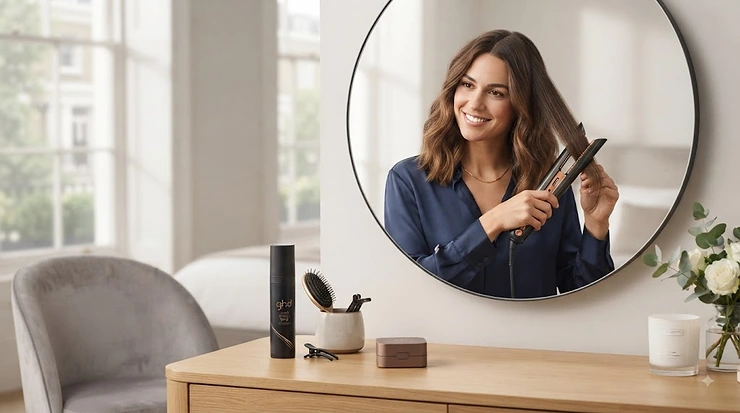
Stand in the hair appliance aisle at Boots for more than thirty seconds and you’ll hear it: someone asking a member of staff whether a flat iron vs hair straightener actually means two different tools, or just two names for the same box of tricks sitting on the shelf. It’s a fair question, and honestly, one that trips up even people who’ve been straightening their hair for years.
Here’s the short version, because you deserve one straight away: in the UK, “hair straightener” is the everyday term, while “flat iron” is what you’ll hear more in American reviews, salon training manuals, and increasingly, on TikTok. They’re the same category of appliance — but the word you use often hints at what you’re shopping for, whether that’s a no-frills high-street pick or a “professional” salon-grade tool.
This guide digs into the flat iron vs hair straightener question properly. We’ll compare seven real, currently available UK models spanning budget to premium, unpack single-plate vs dual-plate irons, work out which options suit fine hair, thick hair, and everything between, and look at where a straightening brush fits into the picture. Every recommendation here is grounded in real specifications and genuinely sourced review sentiment — no invented five-star raves, just honest analysis you can actually use. According to the Wikipedia entry on hair irons, the category includes straightening irons, curling irons and crimping irons, with straighteners commonly called either “straighteners” or “flat irons” depending on where you’re standing. By the end, you’ll know exactly which type of iron your hair actually needs — not just which one has the flashiest packaging.
Quick Comparison Table: Flat Iron vs Hair Straightener Picks at a Glance
| Product | Type | Price Range | Best For |
|---|---|---|---|
| ghd Platinum+ Styler | Dual-plate iron | £215–£235 | All-round professional use |
| Dyson Airstrait | Airflow straightener | £380–£450 | Curly/coily hair, minimal heat damage |
| Cloud Nine Original Iron | Dual-plate iron | £140–£200 range | Adjustable heat, all hair types |
| ghd Gold Styler | Dual-plate iron | £130–£175 | Thick, wavy hair |
| BaByliss Super Smooth Wide | Dual-plate iron | £35–£65 | Budget, longer/thicker hair |
| Remington Shine Therapy S8500 | Dual-plate iron | £20–£35 | Fine or colour-treated hair |
| ghd Glide Hot Brush | Straightening brush | £110–£140 | Second-day touch-ups, frizz control |
Looking at the spread above, there’s a clear pattern: the further you move from the budget end, the more control you get over heat and pressure, which matters far more for hair health than most people realise. The Remington Shine Therapy S8500 proves you don’t need to spend big to get usable results on fine or fragile hair, while the Dyson Airstrait occupies its own category entirely by skipping heated plates altogether. Note that all prices are approximate and fluctuate regularly, so always check the current price before buying.
💬 Just one click — help others make better buying decisions too!😊
Top 7 Flat Irons and Hair Straighteners: Expert Analysis
Coverage below spans budget, mid-range and premium options, plus a straightening brush for anyone who wants a gentler alternative to daily clamping.
1. ghd Platinum+ Styler — smart heat sensors that adapt to your hair
The standout here is genuinely clever engineering: sensors built into the floating plates read your hair’s thickness and your styling speed roughly 250 times a second, adjusting power delivery on the fly rather than blasting every section with the same heat. Key specs worth knowing: it runs at a single fixed temperature of 185°C, the brand’s research-backed “optimum” setting, with a wishbone hinge that keeps the plates aligned so hair doesn’t get caught mid-stroke — a genuine gripe with some older straighteners. Based on the spec comparison with rival premium irons, the Platinum+ earns its place through consistency rather than raw power: it’s not the fastest through very coarse, resistant hair, but it’s remarkably gentle for repeated daily use, which matters if you’re straightening most days of the week. Reviewers consistently note that the plates glide with minimal drag and that hair looks noticeably glossier after just one pass, though several also mention the fixed single-heat-setting design means you can’t dial things down for particularly fine or damaged hair the way you can with adjustable rivals.
Pros:
- ✅ Predictive heat sensors reduce excess heat exposure
- ✅ Wishbone hinge prevents snagging on long hair
- ✅ Consistent results across curls, waves and straight styles
Cons:
- ❌ No adjustable heat settings for fine or fragile hair
- ❌ Among the pricier dual-plate irons on the UK market
At around £215–£235, this sits firmly in premium territory, but the durability reputation GHD has built over two decades means the cost-per-use works out lower than it first appears if you’re a daily styler.
2. Dyson Airstrait — straightens with air, not heated plates
What makes this one genuinely different is that there are no hot plates at all — two narrow apertures direct precisely controlled hot air across the hair strand, drying and straightening in one motion. The headline specs: a 1,600W motor, two modes (Wet-to-Dry and Dry), three heat settings and an LCD screen showing airflow and temperature in real time, all built for people who currently blow-dry and then straighten as two separate steps. What most buyers overlook about this model is that it isn’t really competing with a standard flat iron on speed for already-dry, straight hair — its real advantage shows up on curly, coily or very frizzy textures, where skipping the heated-plate clamp altogether meaningfully reduces cumulative heat exposure. Reviewers testing it on damp, fine hair report that two passes on the highest setting was enough to go from towel-dried to smooth, with results looking shinier and holding more natural movement than plate-straightened hair typically does. The trade-off, honestly, is bulk and weight compared with a traditional iron, plus a hefty price tag that puts it out of reach for casual users.
Pros:
- ✅ No heated plates means significantly less direct heat contact
- ✅ Combines drying and straightening into one step
- ✅ Works well on wet, curly and coily hair types
Cons:
- ❌ Bulkier and heavier than a traditional straightener
- ❌ Among the most expensive tools in this entire category
Expect to pay somewhere in the £380–£450 range, though prices dip meaningfully around sales events — for anyone straightening curly or coily hair after every wash, the time saved alone can justify the outlay.
3. Cloud Nine Original Iron — eleven heat settings for genuine hair-type flexibility
This one’s standout feature is choice: eleven temperature settings between 100°C and 200°C, which is considerably more granular control than most rivals offer at a similar price point. The plates are mineral-infused ceramic and “floating,” meaning they flex slightly to maintain even pressure along the hair shaft rather than clamping unevenly at the root and tip. Here’s what the spec sheet won’t tell you outright, but real usage suggests: having eleven settings rather than a fixed temperature is genuinely useful if you’re straightening a mix of hair types in one household, or if your own hair changes texture between roots and ends. Aggregated customer sentiment across retailer reviews is largely positive, with buyers frequently comparing it favourably to premium GHD models on performance while flagging that the plain matte-black design feels a little basic for the price, and that the outer casing can get warmer to the touch than expected during longer sessions. A cordless variant exists too, aimed at people who want portability without sacrificing the same 200°C ceiling.
Pros:
- ✅ Eleven adjustable heat settings from 100°C to 200°C
- ✅ Floating plates maintain even pressure throughout
- ✅ Comes with a heat-resistant carry case as standard
Cons:
- ❌ Casing can feel noticeably warm during extended use
- ❌ Design is understated compared with rival premium brands
Pricing generally sits between £140 and £200, positioning it as a genuine premium alternative to ghd for anyone who values adjustable heat over brand recognition.
4. ghd Gold Styler — dual-zone sensors built for thick, wavy hair
The ghd Gold Styler‘s standout is its dual-zone heat technology: two next-generation sensors, one per plate, work to hold the 185°C styling temperature consistent from root to tip rather than letting it dip mid-stroke on thicker sections. Specs worth flagging: it uses the same rounded-barrel design as the Platinum+, meaning it doubles as a curling and waving tool, and it reaches full heat in around 25 to 30 seconds. Based on the spec comparison with the Platinum+, the Gold is essentially the previous generation of GHD’s sensor technology at a lower price point — you lose the predictive, speed-adjusting element, but retain the even-heat benefit that matters most for avoiding hot spots. Reviewers with thick, wavy or coarse hair report that it handles volume well and that one straightening session tends to hold for several days, though a handful note that fine or thin hair types found the fixed 185°C a touch high without an adjustable option. It’s a strong middle-ground pick for anyone who wants GHD’s build quality without paying Platinum+ prices.
Pros:
- ✅ Dual-zone sensors keep heat consistent root to tip
- ✅ Rounded barrel doubles up for curls and waves
- ✅ Fast heat-up time of under 30 seconds
Cons:
- ❌ Single fixed temperature isn’t ideal for very fine hair
- ❌ Fewer smart features than the flagship Platinum+ model
Expect to pay in the £130–£175 range, making it one of the more accessible ways into genuine salon-brand engineering.
5. BaByliss Super Smooth Wide — extra-wide plates for fast coverage on longer hair
The headline feature is plate width: at roughly 35mm wide, these tourmaline-ceramic plates cover noticeably more hair per stroke than standard 25mm plates, cutting down the number of passes needed on long or thick hair. Key specs with real-world impact: six digital heat settings ranging from 140°C to 235°C give you genuine flexibility, from a gentle setting for fine or colour-treated hair up to a high setting for coarse, resistant textures, plus an ionic frizz-control function aimed at reducing static and flyaways. Here’s what most buyers overlook about wide-plate irons generally — they’re brilliant for speed on long hair but can be genuinely awkward around a fringe or short layers, so this isn’t the right pick if most of your styling happens close to the hairline. Aggregated review sentiment on retailer sites is strongly positive for thick and curly hair types, with buyers repeatedly praising the coverage and value for money, though a minority of reviewers with fine or damaged hair mention the results feeling slightly drying without a heat-protectant applied first.
Pros:
- ✅ Wide 35mm plates cover more hair per stroke
- ✅ Six heat settings from 140°C to 235°C
- ✅ Genuinely strong value at this price point
Cons:
- ❌ Less practical for fringes and short, layered styles
- ❌ Some fine-hair users report needing a heat protectant first
Typically priced between £35 and £65, this is one of the strongest budget-to-mid picks for anyone with long or thick hair who wants speed without a premium price tag.
6. Remington Shine Therapy S8500 — ceramic plates built with fine and coloured hair in mind
What sets this one apart is the plate coating itself: advanced ceramic infused with Moroccan argan oil and Vitamin E, designed to emit conditioning micro-particles as the plates heat up rather than simply applying dry heat. The specs that matter here: nine temperature settings from 150°C to 230°C, with the brand explicitly recommending the lower end for coloured, bleached or fine hair — a detail that’s genuinely useful rather than marketing fluff, since fine hair is more prone to heat damage at high temperatures. On paper, this means the S8500 is one of the more thoughtfully calibrated budget irons for anyone who’s been told to “turn the heat down” but doesn’t own a straightener that lets them do so meaningfully. Aggregated customer sentiment is notably positive for a budget product, with reviewers frequently mentioning improved shine and reduced frizz after switching from a basic straightener, alongside praise for the 15-second heat-up time; the main recurring criticism is that the plates are on the narrower side, which slows things down on very long or thick hair. A turbo-boost function offers extra heat briefly for stubborn sections when needed.
Pros:
- ✅ Nine heat settings suited to fine and coloured hair
- ✅ Argan oil-infused plates aimed at reducing frizz
- ✅ Fast 15-second heat-up and genuinely low price
Cons:
- ❌ Narrower plates mean more passes on thick hair
- ❌ Auto shut-off at 60 minutes is longer than some rivals
At roughly £20–£35, this is the most affordable pick here and arguably the best-suited option in this list specifically for fine hair.
7. ghd Glide Hot Brush — a straightening brush for gentler, faster second-day styling
The ghd Glide takes a different shape entirely: rather than clamping plates, it’s a straightening brush with a heated ceramic plate running through short tension bristles, longer detangling bristles, and protective prongs, all working together in a single stroke through the hair. Specs worth understanding: it runs at a fixed 185°C, heats up in about 90 seconds, and uses an anti-static ioniser to cut down on flyaways as you brush. Reviewers consistently note that it excels at “second-day” styling — smoothing frizz and flattening bedhead without the full commitment of clamping every section — but is noticeably less effective than a genuine flat iron at transforming very curly or coily hair into fully straight styles from scratch. What the spec sheet won’t tell you, but user reports suggest, is that technique matters more here than with a standard iron: slow, deliberate strokes work far better than quick brushing motions, and it can take a little practice to get consistent results. It’s best understood as a companion tool alongside, rather than a replacement for, a dedicated flat iron or hair straightener.
Pros:
- ✅ Gentler single-stroke styling reduces repeated heat passes
- ✅ Fast, easy technique with no hairdresser-level skill needed
- ✅ Doubles as a detangling brush during styling
Cons:
- ❌ Not a full substitute for very curly or coily hair
- ❌ Fixed single heat setting with no adjustment
Priced around £110–£140, it’s a genuinely useful addition to a routine rather than a first purchase — best suited to people who already own a flat iron and want a quicker option for in-between days.
Flat Iron vs Hair Straightener: Is There Really a Difference?
Short answer: not really, and this is the featured-snippet-worthy definition. A flat iron and a hair straightener are the same appliance — two heated plates that clamp and smooth the hair shaft — with “flat iron” more common in American usage and salon terminology, while “hair straightener” dominates everyday UK conversation and retail listings.
Where the terms genuinely start to diverge is in professional contexts. “Flat iron” often crops up in cosmetology training materials and salon supplier catalogues, sometimes implying a slightly more heavy-duty, adjustable-temperature tool built for repeated daily professional use rather than the occasional home styling session. According to Wikipedia’s page on hair straightening, the technique itself dates back centuries, long before either term existed, with people using everything from heated metal implements to household clothes irons before purpose-built ceramic tools became widely available from the 1980s onward.
Practically speaking, if you’re shopping on amazon.co.uk, searching “flat iron” versus “hair straightener” will return largely overlapping results — the product itself doesn’t change based on which phrase you type. What should actually guide your decision is plate type, heat range, and adjustability, not the label on the box.
Single-Plate vs Dual-Plate Irons: Which Should You Buy?
This is one of the more genuinely confusing corners of the market, so let’s clear it up properly. Dual-plate irons — which cover every product reviewed above except the Glide — have two heated ceramic, tourmaline or titanium plates that clamp together, applying even heat to both sides of the hair section simultaneously. Single-plate irons, by contrast, typically pair one heated plate with a non-heated rubber or silicone counter-plate, relying on pressure rather than dual heat to achieve smoothness.
Here’s what actually matters in practice: single-plate designs generally run cooler and gentler overall, since only one side of the hair receives direct heat, which can suit very fine or damaged hair that struggles with dual-sided heat exposure. The trade-off is that they typically need more passes to achieve the same level of straightness, meaning more total heat contact time over a styling session — so the “gentler per pass” advantage can be cancelled out by repetition. Dual-plate irons like the ghd Platinum+ and BaByliss Super Smooth Wide achieve results in fewer strokes, which is generally the better option for most hair types when a good heat-protectant is used alongside them.
Reviewers and stylists broadly agree that single-plate tools are more niche today, often marketed specifically for detail work — fringes, baby hairs, edges — rather than as an everyday full-head straightener. Unless you have a very specific reason to want single-sided heat, a dual-plate iron remains the more versatile choice for most UK buyers.
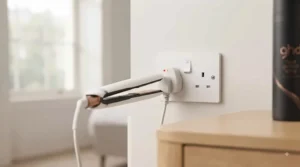
Hair Straighteners for Fine Hair: What to Look For
Fine hair needs a genuinely different approach, not just “the same iron on a lower setting.” The strand itself has a smaller diameter and less structural protein to buffer against heat, meaning damage shows up faster and more visibly than on thick or coarse hair. Based on the spec comparison across this list, the Remington Shine Therapy S8500 stands out here — its lowest 150°C setting sits well below the 200°C-plus temperatures that fine hair rarely needs, and the brand explicitly frames its temperature guidance around hair condition rather than just styling speed.
What most buyers overlook when shopping specifically for hair straighteners for fine hair is that narrower plates aren’t automatically a downside for this hair type — fine hair often responds well to smaller, more precise sections, since larger sections on wide plates can mean uneven heat distribution across a thinner strand. Look for a genuinely adjustable low-end temperature (ideally starting at or below 150°C), floating plates that reduce pressure points, and ideally a plate coating — ceramic, tourmaline or argan-oil infused — that’s designed to add slip and reduce drag, since fine hair snags more easily on rougher plate surfaces.
Reviewers consistently note that fine-haired users get noticeably better results, and less breakage, by pairing a lower-heat straightener with a lightweight heat-protectant spray rather than relying on the tool alone. If you have fine hair, resist the urge to buy the highest-spec, highest-temperature model in this list — it genuinely isn’t built with your hair type in mind.
Hair Straighteners for Professional Use: Salon-Grade vs High Street
The phrase hair straighteners for professional use gets thrown around loosely in product listings, so it’s worth being precise about what actually separates a genuinely salon-grade tool from a high-street one. Professional-use irons, like the ghd Platinum+ and Cloud Nine Original Iron, are typically built for repeated daily use across multiple clients or family members, with more robust internal components, more consistent heat recovery between sections, and — critically — more advanced heat-sensing technology that reduces damage from repeated, all-day contact.
Here’s what the spec sheet won’t tell you outright: the biggest practical difference for professional use isn’t raw maximum temperature — most irons top out somewhere between 200°C and 235°C regardless of price — it’s how consistently that temperature holds under continuous use. Budget irons often dip in temperature partway through a section and need to “catch up,” which typically means either slower styling or more repeated passes, both of which add up to more cumulative heat exposure over a working day.
If you’re training, working in a salon, or simply straightening several people’s hair regularly, the ghd Platinum+‘s predictive sensor technology and the ghd Gold Styler‘s dual-zone heat consistency both genuinely earn their higher price tags in this context. For occasional personal use, that level of engineering is a nice-to-have rather than a necessity — which is exactly why budget options like the BaByliss Super Smooth Wide remain entirely sensible for most households.
Straightening Brush vs Flat Iron: Benefits Compared
| Factor | Straightening Brush (e.g. ghd Glide) | Traditional Flat Iron |
|---|---|---|
| Heat contact per section | Single gentle pass | Firmer clamped pressure |
| Best for | Second-day frizz, touch-ups | Full transformation, curly to straight |
| Learning curve | Minimal, brush-like motion | Moderate, requires sectioning technique |
| Styling versatility | Straightening and smoothing only | Straightening, curling and waving |
| Typical price range | £110–£140 | £20–£450 depending on model |
Reading the table, the honest takeaway is that a straightening brush and a traditional flat iron aren’t really competing for the same job. The ghd Glide genuinely shines on hair that’s already fairly straight but needs frizz tamed or volume flattened, delivering that in under a minute with minimal technique required. For anyone starting from properly curly, coily or very wavy hair, a dual-plate iron like the ghd Platinum+ or Cloud Nine Original Iron will simply achieve a more thorough, longer-lasting result, because the firm clamping pressure does mechanical work that a brush’s lighter touch can’t replicate.
How to Choose a Flat Iron or Hair Straightener for Your Hair Type
Working out which tool suits your hair type suitability doesn’t need to be complicated — these seven considerations, in order of importance, cover almost every buying decision:
- Assess your hair’s natural texture first. Fine, straight hair typically needs 150–180°C; medium or wavy hair sits comfortably around 180–200°C; thick, coarse or very curly hair may genuinely need 200–230°C to achieve lasting results.
- Check for genuinely adjustable heat, not just a dial. A straightener offering five or more distinct temperature settings, like the Cloud Nine Original Iron‘s eleven-setting range, gives real flexibility as your hair’s condition changes with the seasons, colouring, or age.
- Match plate width to your hair length and style. Narrower plates (20–25mm) suit shorter styles and fringes; wider plates (30–40mm) like those on the BaByliss Super Smooth Wide cover more ground on long or thick hair.
- Prioritise plate material for glide, not just looks. Ceramic, tourmaline and titanium coatings all reduce drag differently — fine or damaged hair benefits most from smoother, lower-friction ceramic surfaces.
- Factor in floating plates if you style daily. Plates that flex slightly under pressure, as seen on the ghd Platinum+ and Cloud Nine Original Iron, distribute heat and tension more evenly along the hair shaft.
- Decide whether professional-grade engineering is worth it. If you’re styling multiple people’s hair regularly, the consistency benefits of premium sensor technology genuinely pay off; for occasional personal use, mid-range options perform admirably.
- Consider a straightening brush as a second tool, not a first. If frizz control between full styling sessions is your main pain point, something like the ghd Glide complements — rather than replaces — your main iron.
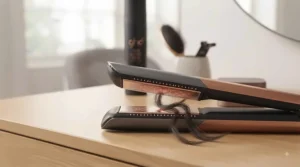
Common Mistakes When Buying a Flat Iron or Hair Straightener
Even careful shoppers fall into a handful of predictable traps. The most common is buying based purely on brand recognition rather than checking whether the temperature range actually suits their hair — a premium fixed-185°C iron can be genuinely wrong for someone with very fine hair who needed a lower, adjustable setting all along.
A second frequent mistake is underestimating plate width’s impact on styling time. Buyers with long, thick hair regularly purchase narrow-plate irons because they’re cheaper, then find themselves spending twice as long styling — and exposing hair to twice the heat contact — as they would with a wider-plate model like the BaByliss Super Smooth Wide.
Reviewers consistently flag a third issue: skipping heat-protectant entirely because “the ceramic plates are supposed to be gentle.” Ceramic and tourmaline coatings reduce friction and static, but they don’t eliminate heat damage — a protectant spray remains essential regardless of how premium the iron is. Finally, plenty of buyers overlook auto shut-off timing, assuming all irons behave the same; in reality, this ranges from 30 minutes on the Cloud Nine Original Iron to 60 minutes on the Remington Shine Therapy S8500, which matters more than you’d think for anyone prone to leaving the house in a hurry.
Practical Usage Guide: Getting Salon Results at Home
Getting consistently good results comes down to preparation as much as the tool itself. Start with completely dry hair — styling damp sections causes a distinctive sizzling sound that signals real, visible damage happening in real time, regardless of which straightener you’re using. Apply a heat-protectant spray evenly through mid-lengths and ends before you begin, then section hair into manageable portions roughly one to two inches wide, clipping the rest out of the way.
Work in slow, single, deliberate strokes from root to tip rather than repeatedly clamping the same section — each additional pass adds cumulative heat exposure without necessarily improving the result. For irons with adjustable heat, like the BaByliss Super Smooth Wide or Remington Shine Therapy S8500, start on a lower setting and only increase if the first pass doesn’t achieve the smoothness you want; it’s far easier to go hotter than to undo damage from starting too high.
In the first thirty days with a new straightener, the most common mistake is over-styling as you get to grips with a new heat range — resist the urge to straighten daily while you’re still learning how your specific model responds to your hair. For maintenance, wipe plates with a barely damp cloth once cool to remove product build-up, which otherwise transfers heat unevenly over time and shortens the appliance’s effective lifespan.
Real-World Scenarios: Matching the Iron to Your Lifestyle
Picture three genuinely different buyers, each needing a different answer to the flat iron vs hair straightener question. A university student on a tight budget, styling two or three times a week between lectures, is best served by something like the Remington Shine Therapy S8500 or BaByliss Super Smooth Wide — both deliver reliable results without the premium price tag, and neither requires the kind of daily-use durability that justifies spending more.
A hairdressing apprentice or salon junior, styling multiple clients’ hair every working day, has fundamentally different needs: consistency under continuous use matters more than initial cost, making the ghd Platinum+ or ghd Gold Styler‘s more advanced heat-sensing technology a genuinely sound investment that pays for itself through reduced client hair damage and faster, more predictable styling times.
A parent with naturally curly, frizz-prone hair who washes and styles most mornings before work sits in a third category entirely — for this use case, the Dyson Airstrait‘s wet-to-dry approach could realistically save fifteen to twenty minutes each morning by combining drying and straightening, while meaningfully reducing the cumulative heat damage that comes from daily plate-clamping on curly textures. None of these three buyers would be well served by simply picking “the best” straightener in isolation — the right choice always depends on frequency, hair type, and how the tool fits your actual routine.
Problem → Solution: Fixing Common Straightening Frustrations
Problem: Hair looks straight but falls flat by lunchtime. This usually points to insufficient cooling time before styling products or hats disturb the hair, or a heat setting too low to fully reshape the hydrogen bonds in the hair shaft — try increasing temperature slightly and holding each section for a full two to three seconds.
Problem: Straightener drags and pulls, even on clean hair. This is typically a plate-coating issue — worn or lower-quality ceramic coatings lose their smooth glide over time. If you’re experiencing this with an older iron, it may genuinely be time to replace it rather than persisting through the snagging.
Problem: Hair feels dry and brittle after regular straightening. Reviewers and dermatological guidance consistently point to the same root cause here: heat exposure above what your specific hair type needs, often compounded by skipping heat-protectant. Dropping to a lower adjustable setting, like those available on the Cloud Nine Original Iron, alongside consistent protectant use, is the most effective fix.
Problem: Fringe or short layers are difficult to style precisely. Wide-plate irons like the BaByliss Super Smooth Wide genuinely struggle here — a narrower-plate model, or a straightening brush such as the ghd Glide for light touch-ups, will offer considerably more control.
Problem: Curly hair reverts to frizz within hours. This is where a plate-based iron may simply be fighting your hair’s natural structure. The Dyson Airstrait‘s airflow-based approach, which works with wet hair from the start, tends to produce noticeably longer-lasting results on very curly or coily textures.
Long-Term Cost & Maintenance: Is Premium Worth It?
| Tier | Typical Price Range | Expected Lifespan | Cost-Per-Year (approx., 3-year use) |
|---|---|---|---|
| Budget (e.g. Remington Shine Therapy S8500) | £20–£35 | 1–2 years | £10–£18/year |
| Mid-range (e.g. BaByliss Super Smooth Wide) | £35–£65 | 2–3 years | £12–£22/year |
| Premium (e.g. ghd Platinum+, Cloud Nine Original Iron) | £140–£235 | 5+ years | £28–£47/year |
Looking at the numbers, the value/ROI picture isn’t as clear-cut as “buy premium and save money long-term” — it depends heavily on how often you actually style your hair. A budget model replaced every eighteen months genuinely works out cheaper overall for someone straightening once or twice a week, while daily users comfortably recoup a premium iron’s higher upfront cost through durability alone, since replacing a budget straightener every year or two adds up faster than it first appears.
Maintenance also factors meaningfully into total cost of ownership. Premium irons with floating, higher-quality plates tend to resist the coating wear that eventually causes budget models to drag and require replacement, extending real-world lifespan well beyond typical warranty periods. For most UK households straightening a few times weekly, a genuinely well-reviewed mid-range option like the BaByliss Super Smooth Wide represents the strongest overall value, balancing upfront cost against realistic longevity.
Safety, Regulations & Heat Damage: What UK Buyers Should Know
Every hair straightener sold legally in Great Britain must meet the Electrical Equipment (Safety) Regulations, carrying either a CE or UKCA mark to confirm it’s been assessed against recognised safety standards covering electric shock risk and construction quality. According to guidance on electrical equipment regulations, manufacturers are legally responsible for ensuring appliances are safe, properly earthed where relevant, and accompanied by a valid declaration of conformity — worth remembering if you’re ever tempted by a suspiciously cheap import without a visible UKCA or CE mark.
Beyond electrical safety, heat damage itself is a genuine, well-documented concern rather than marketing exaggeration. Dermatological guidance consistently recommends starting on the lowest effective heat setting for your hair type and increasing only if needed, limiting styling frequency where possible, and always using a heat-protectant product before any plate-based styling tool touches the hair — advice that applies directly to the American Academy of Dermatology’s published styling guidance, which UK dermatologists broadly echo in their own patient advice.
Practically, this means checking any straightener you’re considering has a genuine auto shut-off feature — all seven products in this guide include one, ranging from 30 to 60 minutes — and resisting the temptation to always reach for the highest heat setting “to be sure.” For most UK hair types and climates, 180–200°C achieves excellent results without the unnecessary risk that comes with routinely maxing out at 230°C or above.
Frequently Asked Questions
❓ Is a flat iron the same as a hair straightener?
❓ What temperature should I use on fine hair?
❓ Are straightening brushes as effective as flat irons?
❓ How often should I replace my hair straightener?
❓ Do more expensive hair straighteners really work better?
Conclusion
If there’s one thing worth taking away from the flat iron vs hair straightener debate, it’s that the terminology matters far less than matching the tool to your actual hair. Fine hair genuinely needs lower, adjustable heat like the Remington Shine Therapy S8500 offers; thick or long hair benefits from wider plates like the BaByliss Super Smooth Wide; curly and coily textures may do best avoiding heated plates altogether with something like the Dyson Airstrait; and anyone straightening daily or professionally will likely see real value in the sensor technology built into the ghd Platinum+ or ghd Gold Styler.
The Cloud Nine Original Iron‘s eleven-setting flexibility makes it a strong middle-ground pick for households with mixed hair types, while the ghd Glide earns its place as a genuinely useful companion tool rather than a standalone solution. Whichever you choose, the research is consistent: adjustable, appropriate heat combined with a genuine heat-protectant matters more for long-term hair health than any single brand or feature.
Take the time to actually assess your hair’s texture and your realistic styling frequency before you buy — it’s the single factor that determines whether a straightener earns its price tag or ends up gathering dust in a drawer within a few months.
Recommended for You
- Best Hair Straighteners UK 2026: 7 Top Picks Tested
- Large Barrel Round Brush Dryer: 7 Best Picks Tested for 2026
- Round Brush Hair Dryer: 7 Bouncy Picks for Salon Volume (2026)
Disclaimer: This article contains affiliate links. As an Amazon Associate, I earn from qualifying purchases. If you purchase products through these links, we may earn a small commission at no additional cost to you.
✨ Found this helpful? Share it with your friends! 💬🤗
