
In This Article
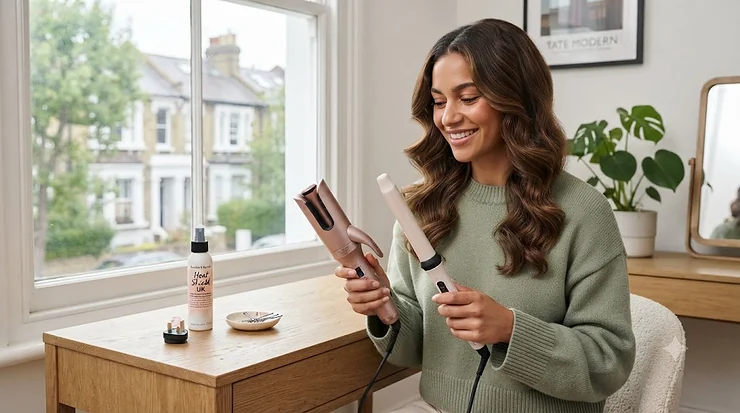
Stand in front of any beauty counter for five minutes and you’ll hear the same debate on repeat: automatic curlers vs curling wands, which one actually deserves a spot on your dressing table? It’s not a trivial question. One camp swears by the button-press simplicity of an automatic curler that pulls your hair in, heats it, and spits out a curl while you check your phone. The other insists nothing beats the control of wrapping a section round a bare wand by hand. Both camps are right, and both are also occasionally kidding themselves.
This guide cuts through the Instagram hype and looks at what these tools genuinely do differently — for your hair type, your morning routine, and your patience levels on a Tuesday when you’ve got eleven minutes before the bus. We’ve researched seven real, current UK products spanning budget rotating barrels to premium airflow stylers, dug into aggregated reviewer sentiment, and mapped out exactly which situations favour which category. Heat damage to hair proteins begins well before scorch marks appear, so understanding how each tool actually behaves at a molecular level matters more than most marketing copy lets on.
By the end, you’ll know whether an automatic curler or a curling wand suits your hair length, your skill level, and your budget — and you’ll have seven genuinely useful options to start with, priced from under £20 to premium territory.
Quick Comparison Table
| Product | Type | Price Range | Best For |
|---|---|---|---|
| TYMO CurlPro Plus | Automatic rotating barrel | £70-£100 | Long or thick hair, one-pass curling |
| Dyson Airwrap i.d | Automatic airflow styler | £370-£480 | Lowest heat damage, premium buyers |
| BaByliss Curl Secret | Automatic ceramic chamber | £70-£120 | Beginners wanting true hands-free styling |
| CHI Spin N Curl | Automatic rotating chamber | £80-£120 | Salon-grade heat, shoulder-length hair |
| Remington Curl Revolution CI606 | Automatic rotating barrel | £45-£90 | Budget automatic curler for beginners |
| GHD Curve Classic Curl Tong | Manual curling wand | £120-£150 | Precise, directional curls |
| TRESemmé Perfectly (Un)Done Wand | Manual curling wand | £15-£25 | Absolute budget, tousled waves |
Looking across the table, the split is obvious: automatic curlers dominate the mid-to-premium range because the rotating mechanism and sensors cost more to engineer, while manual wands can be superb even at pocket-money prices because there’s simply less that can go wrong inside them. If your priority is speed and consistency over multiple styling sessions, the automatics earn their premium. If you want full creative control over curl direction and tightness, a manual wand like the GHD Curve Classic Curl Tong still holds its own against anything automated.
💬 Just one click — help others make better buying decisions too!😊
Top 7 Automatic Curlers and Curling Wands: Expert Analysis
1. TYMO CurlPro Plus — best auto curler for long or thick hair
The TYMO CurlPro Plus solves a problem most rotating curlers quietly ignore: hair that’s too long or too dense for a standard chamber to grab in one clean pass. Its upgraded long barrel design and dual-voltage motor mean it copes with below-shoulder hair that would otherwise need two or three awkward re-insertions in a shorter chamber.
Specs matter here in a practical way. The barrel runs at multiple heat settings up to around 210°C with roughly 600 million negative ions, and on paper that ionic output simply means less static and a smoother finish rather than any magic anti-damage property. Based on the spec comparison with shorter-barrel rivals, buyers with hair past the collarbone will see the biggest real-world benefit, since the extra barrel length reduces how many separate sections you need to curl.
Reviewers consistently report that the TYMO CurlPro Plus replaced a long-barrel manual tong that struggled to curl the full length of their hair in one attempt, describing the switch as a genuine upgrade in convenience rather than just a novelty. A recurring theme in aggregated feedback is that thick hair takes a short adjustment period before the auto-rotation feels intuitive.
Pros:
- ✅ Handles long, thick hair other automatic curlers struggle with
- ✅ Dual voltage makes it genuinely travel-friendly
- ✅ Strong ionic conditioning reduces frizz and static
Cons:
- ❌ Bulkier grip than shorter-barrel automatic curlers
- ❌ Higher price point than entry-level rotating models
Prices typically sit in the £70-£100 range at the time of research, and for anyone with genuinely long hair who’s been fighting a standard-length barrel, that’s a reasonable trade for one-pass curling.
2. Dyson Airwrap i.d — lowest heat damage, most premium build
If price were no object, most hairdressers would point beginners and heat-damage-conscious buyers straight at the Dyson Airwrap i.d. Instead of a hot barrel dragging hair through friction, it uses high-velocity airflow and the Coanda effect to wrap hair around a cool-to-the-touch attachment, styling and drying at the same time.
The i.d element adds intelligent heat control that monitors temperature dozens of times per second via an app-linked profile, which in practice means the tool is constantly throttling itself rather than blasting a fixed high temperature for the whole session. On paper this means significantly less thermal stress on the keratin structures inside each hair shaft compared with a traditional barrel running a static 200°C+.
Aggregated review sentiment across retailers is overwhelmingly positive on styling versatility and gentleness, though a recurring complaint is the steep learning curve with the various barrel and brush attachments in the first few sessions, and the noise level during use surprises first-time buyers.
Pros:
- ✅ Dramatically lower heat exposure than barrel-based tools
- ✅ Dries and styles simultaneously, saving real time
- ✅ Seven attachments cover curls, waves, smoothing and volume
Cons:
- ❌ Significant upfront cost compared with any other option here
- ❌ Multiple attachments mean a genuine learning period
Prices have ranged from around £370 during promotional periods up to the £480 RRP, so it’s worth checking current price before buying, as Dyson runs frequent seasonal offers.
3. BaByliss Curl Secret — best true hands-free automatic curler for beginners
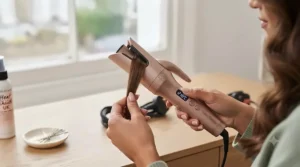
For anyone who wants the purest hands-free styling experience on this list, the BaByliss Curl Secret is the benchmark. Its Auto Curl technology draws a section of hair into a ceramic chamber, heats it from all directions, and releases it automatically after a set timer — no button-holding, no rotation direction to manage.
The chamber offers two or three heat settings and multiple timer options depending on the exact model, with an audible beep telling you when the curl is ready. What most buyers overlook about this model is that the frizz-fighting ionic conditioning system does real, measurable work on flyaways, not just marketing language, because the chamber design exposes more of the hair surface to the ionic stream than an open barrel does.
Long-time users on UK parenting and lifestyle forums describe it as reliably good after well over a year of regular use, with several noting it replaced years of straightener-as-curler workarounds that never quite delivered a proper curl. A shoulder-length bob is commonly asked about, and the honest answer based on the chamber’s minimum grip length is that very short crops under chin-length can struggle to feed in cleanly.
Pros:
- ✅ Genuinely hands-free — no rotation button to hold
- ✅ Ionic conditioning noticeably reduces frizz
- ✅ Trusted UK high-street brand with wide stock availability
Cons:
- ❌ Not ideal for hair shorter than chin-length
- ❌ Fewer heat settings than some rivals
Expect to pay somewhere in the £70-£120 range depending on which generation you buy, with the newer Style Secret Air sitting toward the top of that band.
4. CHI Spin N Curl — salon-grade heat for shoulder-length hair
The CHI Spin N Curl brings genuine professional heritage to the automatic category — CHI’s ceramic and titanium-infused plates are the same technology found in salon tools, and that shows in how evenly the chamber distributes heat across a section.
Three preset temperatures (roughly 370°F, 390°F and 410°F, or about 188-210°C) are matched to fine, medium and coarse hair, with heat-up times scaled accordingly. Here’s what the spec sheet won’t tell you outright: those preset times aren’t arbitrary — CHI calibrated them so thicker hair gets more thermal exposure without you having to guess a manual timer, which is a genuinely useful piece of design most automatic curlers skip.
With tens of thousands of aggregated Amazon reviews averaging around 4.4 out of 5 stars, the CHI Spin N Curl has a strong reputation, though a recurring theme is a noticeable learning curve in the first few uses before the insertion angle feels natural. A specific and important note for UK buyers: several reviewers report the plug supplied is a US-style flat pin rather than a UK three-pin, so always confirm plug type before ordering, since this model is primarily sold through US-facing channels.
Pros:
- ✅ Salon-grade ceramic and titanium heating plates
- ✅ Preset temperatures matched intelligently to hair type
- ✅ Strong tangle protection and auto shut-off
Cons:
- ❌ Plug type varies by seller — check before buying
- ❌ Noticeable learning curve for the first few sessions
Typical UK pricing lands around £80-£110, making it a strong mid-tier pick if the plug and voltage check out for your specific listing.
5. Remington Curl Revolution CI606 — budget-friendly automatic rotating barrel
Not everyone wants to spend three figures to find out whether automatic curling actually suits them, and that’s exactly the gap the Remington Curl Revolution CI606 fills. It uses Instant Curl technology with an automatically rotating barrel that feeds hair in and curls it without you wrapping anything by hand.
Five temperature settings up to 230°C give reasonable flexibility across hair types, and a digital display with temperature lock stops the setting shifting mid-style — a small but genuinely useful detail on a budget tool, since cheaper curlers often drift in temperature during use. The rotation also switches direction, so you can alternate curl orientation for a more natural, less uniform finish rather than every curl falling the same way.
Aggregated customer sentiment describes it as a quality item that heats quickly and glides smoothly through hair, with the main critical theme being that availability fluctuates — it’s gone in and out of stock at UK retailers, so patience or checking multiple sellers pays off.
Pros:
- ✅ Genuinely low entry price for an automatic curler
- ✅ Digital temperature lock prevents mid-style drift
- ✅ Dual-direction rotation for natural-looking curls
Cons:
- ❌ Stock availability is inconsistent at UK retailers
- ❌ Fewer premium finishing details than pricier rivals
Price ranges from around £45 up to £90 depending on retailer and stock levels, and it’s regularly one of the cheapest genuine automatic curlers available on amazon.co.uk.
6. GHD Curve Classic Curl Tong — precise, directional manual curling wand
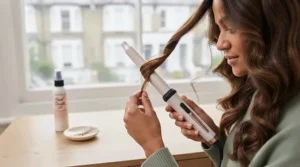
Stepping fully into manual territory, the GHD Curve Classic Curl Tong represents what a curling wand can do that no automatic chamber currently matches: total control over curl placement, direction, and tightness, section by section.
A 26mm barrel sits in the sweet spot for classic, glossy, Hollywood-style curls rather than loose beach waves, and GHD’s ultra-zone heat technology keeps the barrel at a genuinely even temperature along its length — something budget tongs frequently fail at, leaving cooler patches that curl unevenly. Here’s what most buyers overlook about manual wands generally: because you choose exactly where each curl starts and which direction it twists, you can deliberately vary the pattern for a far more natural finish than a machine repeating the same motion.
Independent UK testing praises the secure clamp grip and consistent heat, while noting the trade-off is that results depend entirely on your technique — a beginner’s first attempts rarely match a stylist’s.
Pros:
- ✅ Full manual control over curl direction and tightness
- ✅ Even, consistent barrel heat along its length
- ✅ Trusted premium UK styling brand
Cons:
- ❌ Requires practice to get consistent results
- ❌ Premium price for a manual (non-automatic) tool
Expect to pay in the £120-£150 range, positioning it firmly as a premium manual alternative to the automatic curlers above.
7. TRESemmé Perfectly (Un)Done Waving Wand — best budget manual curling wand
At the opposite end of the spectrum sits the TRESemmé Perfectly (Un)Done Waving Wand, proof that a genuinely usable curling wand doesn’t need to cost more than a takeaway. Its 28mm conical-leaning barrel is built specifically for loose, undone waves rather than tight ringlets.
Ceramic coating and ion conditioning at this price point are honestly a pleasant surprise — cheaper wands often skip ionic technology entirely, leaving hair static and flyaway-prone. On paper the 200°C ceiling is lower than most premium tongs, which in practice means slightly less styling power on very coarse or resistant hair, but plenty of headroom for fine-to-medium hair types.
Reviewers consistently frame it as a reliable everyday wand rather than a special-occasion tool — the kind of curling wand you don’t worry about damaging because it wasn’t a major investment.
Pros:
- ✅ Genuinely low price for a ceramic, ionic wand
- ✅ Well suited to relaxed, undone wave styles
- ✅ Safety stand included for safer countertop use
Cons:
- ❌ Lower maximum temperature than premium tongs
- ❌ Barrel shape less suited to tight, defined curls
At around £15-£25, this is the obvious starting point for anyone who isn’t sure curling wands are for them yet and doesn’t want to gamble a large sum finding out.
What Is an Automatic Curler?
An automatic curler is a heated styling tool with a rotating barrel or chamber that draws in a hair section, curls it mechanically, and releases it — without you manually wrapping hair around a barrel by hand, unlike a traditional curling iron or wand.
That single mechanical difference is the whole story of automatic curlers vs curling wands. A curling wand relies entirely on your hand movement to shape each curl; an automatic curler does the wrapping motion itself once you’ve fed in the hair, using either a rotating barrel (as in most models) or, in Dyson’s case, directed airflow around a stationary attachment. Both approaches produce curls — they just distribute the skill requirement differently, front-loading it onto the manufacturer’s engineering rather than your wrist.
Automatic Curler vs Curling Wand: How Rotating Barrel Technology Actually Works
Rotating barrel technology is the mechanical heart of every automatic curler on this list except the Dyson. Inside the housing, a motor spins the barrel or chamber a set number of degrees once hair is fed in, using sensors — usually a simple pressure or tension detector — to know when enough hair has entered and when to stop rotating so it doesn’t just keep winding indefinitely.
The practical upshot: a rotating barrel curler applies a consistent, repeatable amount of twist to every section you feed it, which is precisely why automatic curlers produce more uniform results across an entire head than most people achieve by hand on a first attempt. A curling wand, by contrast, depends on you replicating the same wrist angle, wrap tightness and hold time for every single section — genuinely difficult to do identically twenty times in a row, which is exactly why salon-trained stylists get more consistent wand results than home users typically do.
Where rotating barrel technology falls short is adaptability. It applies the same motion regardless of section thickness, so very thick or very fine sections can curl slightly differently than intended, whereas a skilled hand adjusts wrap tension on the fly. Where a curling wand falls short is repeatability — brilliant results depend on you, every time, with no mechanical consistency to fall back on when you’re tired or rushing.
| Feature | Automatic curlers | Curling wands |
|---|---|---|
| Consistency across sections | High — mechanical rotation | Variable — depends on technique |
| Directional control | Limited (preset patterns) | Full manual control |
| Learning difficulty | Lower initial barrier | Higher — technique-dependent |
| Speed for full head | Generally faster | Slower, more deliberate |
| Typical price for entry model | £45-£100 | £15-£30 |
The consistency-versus-control trade-off in that table is really the entire automatic curlers vs curling wands debate distilled into five rows. If you value your curls coming out identical without much thought, rotating barrel technology wins outright; if you want to deliberately vary curl tightness and direction for a more editorial, undone look, manual technique still has the edge, and no rotating barrel curler currently replicates that on demand.
How to Choose Between an Automatic Curler and a Curling Wand
- Assess your hair length first. Automatic chambers have a minimum grip length — very short hair (above chin-length) often can’t feed in cleanly, so shorter styles usually suit a manual wand better.
- Be honest about your morning routine. If you genuinely have five rushed minutes most mornings, an automatic curler’s consistency and speed will matter more than a wand’s creative control.
- Consider your styling ambition. Want the exact same soft wave every day? Automatic. Want to vary between tight ringlets and loose beach waves depending on mood? A wand gives you that range.
- Factor in your patience for a learning curve. Both categories have one, but reviewers consistently describe the automatic learning curve as shorter — a few sessions versus weeks of practice for confident wand technique.
- Set a realistic budget band. Genuinely capable automatic curlers start around £45-£70; genuinely capable manual wands can be found from £15-£20, so wands remain the lower-risk entry point financially.
- Check the barrel or chamber size against your desired curl. Smaller barrels (under 25mm) create tighter curls and ringlets; larger barrels (30mm+) create looser, more relaxed waves — true for both categories.
- Confirm dual voltage if you travel. Not every model — CHI’s Spin N Curl in particular — ships with a UK-ready plug by default, so check before you buy if you’ll be using it abroad.
Practical Usage Guide: Hands-Free Styling From Day One
Getting genuine hands-free styling out of an automatic curler starts before you even switch it on. Section clean, completely dry hair into pieces roughly one to one-and-a-half inches wide — wet or damp hair is the single most common reason automatic chambers jam or produce weak curls, since the mechanism simply isn’t designed to process moisture. Apply a heat protectant every time; skipping this step is the fastest route to the exact protein damage that heat-styling research consistently documents in hair fibres exposed to repeated thermal stress.
For your first week, start on the lowest or second-lowest heat setting even if your hair is thick, and work up only if curls fall out too quickly — it’s far easier to increase heat than to undo damage from starting too hot. Hold the section at roughly a 90-degree angle to your head when feeding it into the chamber; feeding it in flat against the scalp is the most common beginner mistake and the main cause of uneven, half-formed curls in the first few sessions.
A simple maintenance habit worth building in from day one: wipe the barrel or chamber with a slightly damp cloth once it’s fully cooled after every few uses, since product build-up inside the chamber is what eventually causes hair to snag or tangle on automatic models — a problem manual wands rarely suffer because their open barrel design has nowhere for product to accumulate unseen.
Real-World Scenarios: Automatic Curlers for Solo Styling and Beyond
Picture three genuinely different buyers and the tool that actually fits each one, rather than the one Instagram tells them to buy.
First, a solo commuter with below-shoulder, fine-to-medium hair who styles alone every weekday morning before an early train. For automatic curlers for solo styling, the priority is speed and one-handed operation — the TYMO CurlPro Plus or BaByliss Curl Secret both fit this brief well, since neither requires a mirror-and-two-hands technique the way a wand does, and both are genuinely usable while half-watching the kettle boil.
Second, a special-occasion stylist — someone curling their hair for weddings, parties or photos maybe twice a month, who wants full control over exactly how tight and how directional each curl is. Here the manual GHD Curve Classic Curl Tong earns its higher price, because occasional, deliberate use rewards the precision only hand technique provides, and the cost per use over a year of occasional events works out far more reasonably than it looks on the price tag alone.
Third, someone testing the waters on a tight budget who isn’t sure whether automatic curling suits their hair type at all. The Remington Curl Revolution CI606 or the TRESemmé Perfectly (Un)Done Waving Wand both let you find out for under £90 combined, rather than gambling £400 on a Dyson before you know if rotating barrel technology even works with your hair texture.
Common Problems and Solutions With Rotating Barrel Stylers
Problem: hair won’t feed into the chamber. This is almost always damp hair or too large a section. Solution: confirm hair is completely dry and reduce your section width by roughly a third.
Problem: curls drop out within an hour. Usually insufficient heat or too little hold time. Solution: raise the heat setting one increment and, on manual wands, hold each section for a full three to five seconds longer than feels necessary.
Problem: hair tangles inside an automatic chamber. Typically caused by product build-up or hair that’s too fine for the rotation speed. Solution: clean the chamber regularly and, for very fine hair, try the lowest rotation or heat setting first.
Problem: uneven curls across the head. On automatic tools this usually means inconsistent section sizes; on manual wands it’s inconsistent wrap technique. Solution: use a comb to create genuinely equal sections before you start, on either tool type.
Problem: static and flyaways after styling. Solution: prioritise models with ionic conditioning (most in this guide have it) and finish with a light, non-alcohol hairspray rather than heavier serums that can weigh curls down.
The Learning Difficulty Curve: Automatic Curlers vs Curling Wands for Beginners
Learning difficulty is where automatic curlers vs curling wands diverges most sharply for first-time buyers. Aggregated review sentiment across every automatic model in this guide mentions some version of the same pattern: a slightly awkward first few attempts, followed by genuinely intuitive use from roughly the third or fourth session onward, once the correct insertion angle becomes muscle memory.
Curling wands ask more of you for longer. There’s no sensor correcting your wrap tension or timing — every curl is a small technical decision repeated by hand, and consistency genuinely does take weeks of regular practice to develop, not days. That’s not a criticism of wands; it’s simply a different skill investment, and many people find the eventual creative control worth the steeper early learning difficulty.
If low learning difficulty is your top priority — say, you’re buying a first heat tool for a teenager, or you simply don’t enjoy fiddly technique-based tasks — every automatic curler reviewed here will get you to a competent result faster than a wand will. If you’re willing to trade a longer learning period for more creative range, a wand remains the better long-term investment.
Common Mistakes When Buying an Automatic Curler or Curling Wand
The single most frequent mistake is buying based on barrel size alone without checking hair length compatibility — a 25mm automatic chamber genuinely can’t process very short hair regardless of how good the reviews are. A close second is skipping the voltage and plug check, particularly relevant for the CHI Spin N Curl, where UK buyers have reported receiving US-style plugs.
Buyers also commonly underestimate the learning difficulty gap between categories, expecting wand-level results from day one and getting discouraged when session three doesn’t match a salon finish — realistic expectations matter as much as the tool itself. Finally, chasing the highest possible temperature setting is a common and avoidable error; research into thermally stressed keratin proteins shows meaningful structural degradation accelerating well before a tool’s maximum setting, so matching heat to your actual hair type rather than defaulting to “high” protects your hair far more than any coating or ionic feature can compensate for.
Long-Term Cost & Maintenance
Total cost of ownership tells a more honest story than sticker price alone. A £400 Dyson Airwrap used two or three times a week for three years works out to roughly 30-40 pence per use before you factor in reduced heat damage potentially saving on separate repair treatments — a genuinely reasonable figure for a premium buyer, though clearly not accessible to everyone. A £20 TRESemmé wand used at the same frequency costs closer to 4-5 pence per use across the same period, assuming it survives that long, which budget tools don’t always manage.
Maintenance across every tool here is straightforward: wipe barrels or chambers when cool, store with any included heat mat or pouch rather than loose in a drawer where the cable can fray, and never wind the cord tightly around a hot barrel immediately after use. When a styler eventually fails or is replaced, it counts as small electrical waste rather than general rubbish, and most UK councils now offer dedicated collection points or kerbside WEEE collections specifically to keep items like this out of landfill.
Safety, Voltage and Regulations Guide
Every product in this guide runs on mains electricity at genuinely high temperatures, typically 160-230°C, so basic safety habits matter regardless of price point. Always use on a heat-resistant surface, never on wet hair unless a specific model explicitly permits it, and unplug immediately after use rather than leaving any heated tool running unattended, even briefly.
Dual voltage matters more than most buyers realise if you ever travel. UK mains runs at 230V, and while several models here — including the TYMO CurlPro Plus and Remington Curl Revolution CI606 — explicitly advertise worldwide voltage compatibility, others may not, and running a single-voltage US tool on UK mains without the correct adaptor risks damaging the appliance or creating a genuine fire hazard. Always check voltage compatibility on the specific listing before travelling with any heated styling tool.
If a burn does happen despite sensible precautions, official NHS first aid guidance is to cool the area under cool or lukewarm running water for at least fifteen minutes as soon as possible, avoiding ice, creams or butter, and to seek medical advice for anything beyond a minor mark.
Frequently Asked Questions
❓ Are automatic curlers actually better than curling wands?
❓ Do automatic curlers damage hair more than curling wands?
❓ What barrel size is best for loose beach waves?
❓ How long do automatic curlers usually last?
❓ Can beginners use a curling wand without burning themselves?
Conclusion
There’s no single winner in the automatic curlers vs curling wands debate, and honestly, anyone promising you a definitive answer is oversimplifying. Automatic curlers — from the budget-friendly Remington Curl Revolution CI606 right up to the premium Dyson Airwrap i.d — genuinely deliver on consistency and hands-free convenience, particularly for anyone styling solo on a tight morning schedule. Curling wands, whether the entry-level TRESemmé Perfectly (Un)Done Waving Wand or the precision-focused GHD Curve Classic Curl Tong, still hold the advantage for creative control and directional variety that no rotating barrel has yet fully replicated.
The honest starting point is your own hair length, your patience for a learning curve, and how much control you actually want over the finished look — not which tool has the biggest marketing budget. Match those three factors against the seven options above, and you’ll land on the right pick far more reliably than any single “best overall” claim could promise.
Recommended for You
- Curling Wands For Long Hair: 7 Brilliant Picks For 2026
- Curling Wands Under £30: 7 Brilliant Budget Picks (2026)
- Conical vs Cylindrical Curling Wands: 7 Brilliant Picks (2026)
Disclaimer: This article contains affiliate links. As an Amazon Associate, I earn from qualifying purchases. If you purchase products through these links, we may earn a small commission at no additional cost to you.
✨ Found this helpful? Share it with your friends! 💬🤗
